Check This Out: Santa Claus Rally In 2024? Poll Shows Investors Split On End Of Year Returns, 57% Say This…
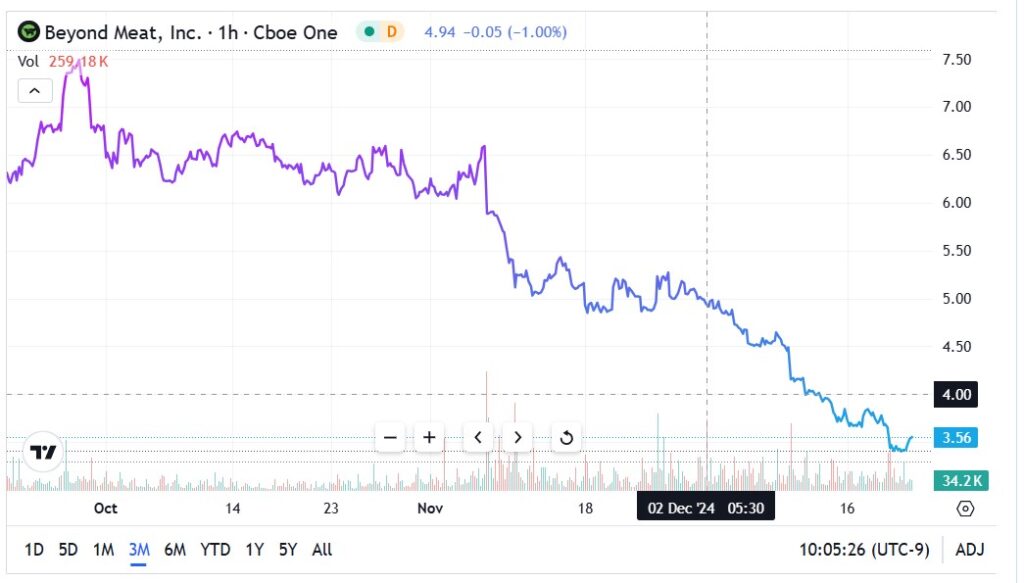
Finally, the immediate technical situation is difficult to ignore. Beyond Meat stock struggled to hold onto the critical $5 support line in November and it conspicuously failed to grip the $4 level as well. Even the $3.50 level appears questionable, tempting an options strategy called the bear call spread.
Underwriting the Risk That BYND Stock Will Stay Subdued
A distinct multi-leg transaction, the bear call spread — as implied in the name — represents a pessimistic trade. The basic idea is the trader entering the position anticipates the target security to fall in value. However, unlike a "directly" bearish wager, the bear call starts from a cash inflow position.
Structurally, the trader sells a call option for a given expiration date while simultaneously buying a call at a higher strike price. Naturally, the gross debit paid for the long call cuts into the income received from the short call credit. However, buying the long call is important in case the stock moves against the trader (i.e. in the upward direction).
Therefore, the bear call spread features a capped-risk, capped-reward opportunity. Effectively, the speculator is underwriting the risk that the target security will not rise above the breakeven threshold. Ideally, the stock in question will drop to the short call strike or slightly below to collect the maximum reward, which is called the yield.
Generally speaking, the higher the yield, the less likely it is that the bear call spread will pan out successfully for the risk underwriter. At the same time, extremely low yields may pose a significant positional risk due to the amount of capital in danger of incurring the maximum loss.
Targeting the $3.50 Level
For a quick yield opportunity, traders may consider selling the 3.50/4.00 bear call spread for the options chain expiring Jan. 3, 2025. At the time of writing, the individual process involves selling the $3.50 call at a bid of 20 cents and buying the $4 call at an ask of 12 cents. Applying the options multiplier, the maximum reward is $8 for every $42 at risk or a yield of slightly more than 19%.
While it's not the most exciting reward, the timeframe comes out to only two business weeks. Further, BYND stock needs to fall to $3.50 (or lower) to receive the maximum yield. That's a doable proposition given the security's technical and fundamental woes.
Lastly, while businesses always have a chance at a comeback, Beyond Meat has consistently disappointed its stakeholders. Since the start of the year, BYND has lost about 56% of its value. With insiders not believing in their own stock, it's a gargantuan task to convince outside investors to take the plunge.
Read Next:
Photo: Shutterstock
© 2026 Benzinga.com. Benzinga does not provide investment advice. All rights reserved.
To add Benzinga News as your preferred source on Google, click here.