There were roughly 6,350 stocks listed on the Nasdaq Capital Market and the New York Stock Exchange in the third quarter of 2022 according to Statista – and each of those stocks belongs to one of a total of just 11 sectors.
The stock market sectors are Materials, Communication Services, Energy, Financial, Industrials, Consumer Staples, Real Estate, Technology, Consumer Discretionary, Health Care, and Utilities. These sectors behave cyclically, and it’s important for investors to know them.
Studies conducted by the National Bureau of Economic Research (NBER) have uncovered economic cycles and divided them into four distinct phases. These phases have been fairly consistent since 1854, and the transition from one stage to another is typically preceded by a stock market phenomenon called sector rotation. Sector rotation occurs when money moves from one stock sector to another.
Sector rotation can be complicated, but the main idea is that money moves into cyclical stocks when the economy is strong and into defensive stocks when the economy is weak. The Consumer Discretionary, Technology, and Real Estate sectors tend to be cyclical stocks, performing well during stronger economic periods and poorer during recessions. Utilities, Health Care and Consumer Staples tend to be defensive stocks, experiencing moderate changes in prices, regardless of the state of the economy.
Cyclical stocks include companies in sectors where consumers make discretionary expenditures – like retailers, restaurants, luxury goods, and technology – while defensive stocks include companies that see steady demand despite economic weakness – like healthcare, groceries, and utilities.
How To Make A Sector Rotation Play
Savvy investors can use their knowledge of sector rotation to help avoid losses and potentially generate returns during shifting market cycles.
For example, assume one had a significant position in the stock Netflix (NASDAQ:NFLX) going into 2022 and one’s analysis led one to believe that the economy was weakening. Replacing Netflix, a cyclical stock that dropped 51% in 2022, with United Health Group (NYSE:UNH), a defensive stock that rose 5% in 2022, could have been a prudent move to help prevent significant losses.
Investors regularly participate in these kinds of monetary migrations, but they often do it using exchange-traded funds (ETFs) rather than individual stocks. ETFs like the Consumer Staples Select Sector SPDR Fund (NYSE:XLP) and the Materials Select Sector SPDR Fund (NYSE:XLB) are two examples of popular ETFs.
Making a sector rotation play can mean liquidating stocks in a certain sector and buying stocks in another or simply purchasing ETFs in the sector one wishes to rotate into.
Using Options To Leverage Rotation
Cboe Global Markets Inc. (BATS:CBOE) Select Sectors Index Options provide investors with a third option: purchasing sector-wide options contracts. These options contracts allow global investors to affordably gain exposure to U.S. industry sectors while gaining potential tax advantages.
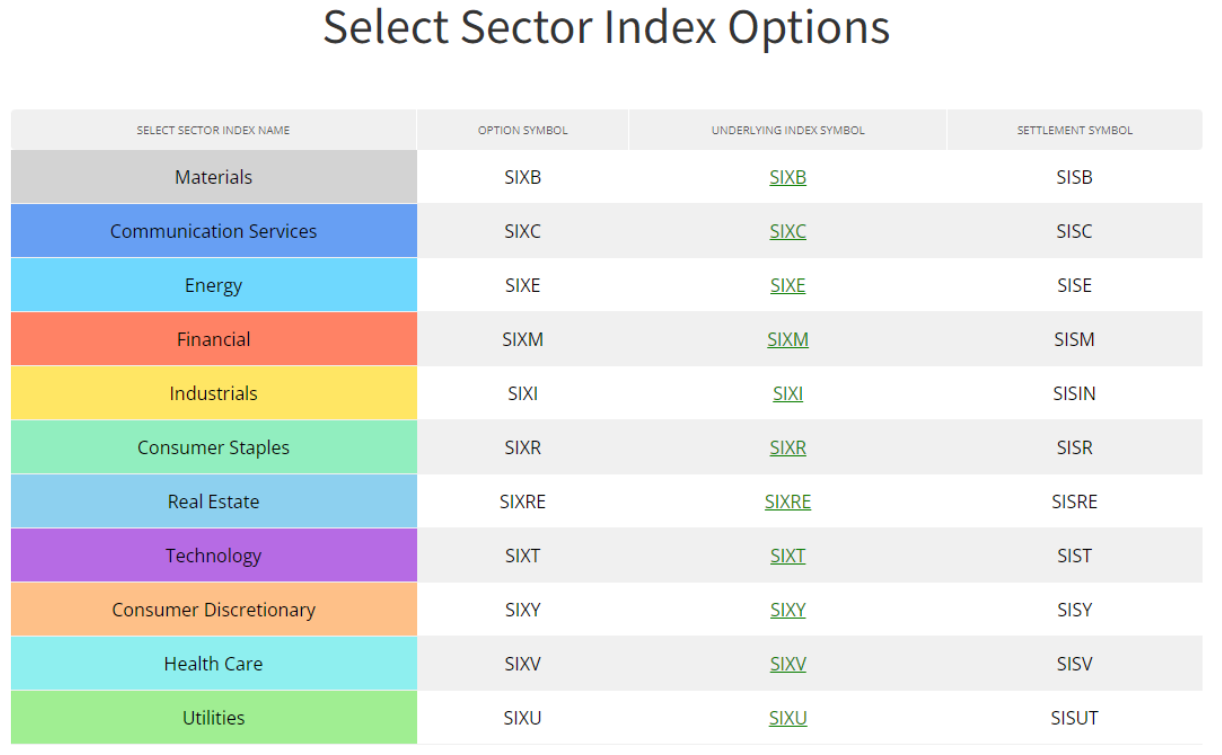
Source: Cboe Global Markets
Cboe offers investors access to each of the 11 stock sectors, ensuring investors have the option to choose whichever sector they want to rotate into. Aside from tax benefits and ease of access, investors also leverage the inherent qualities of options via this sector rotation method.
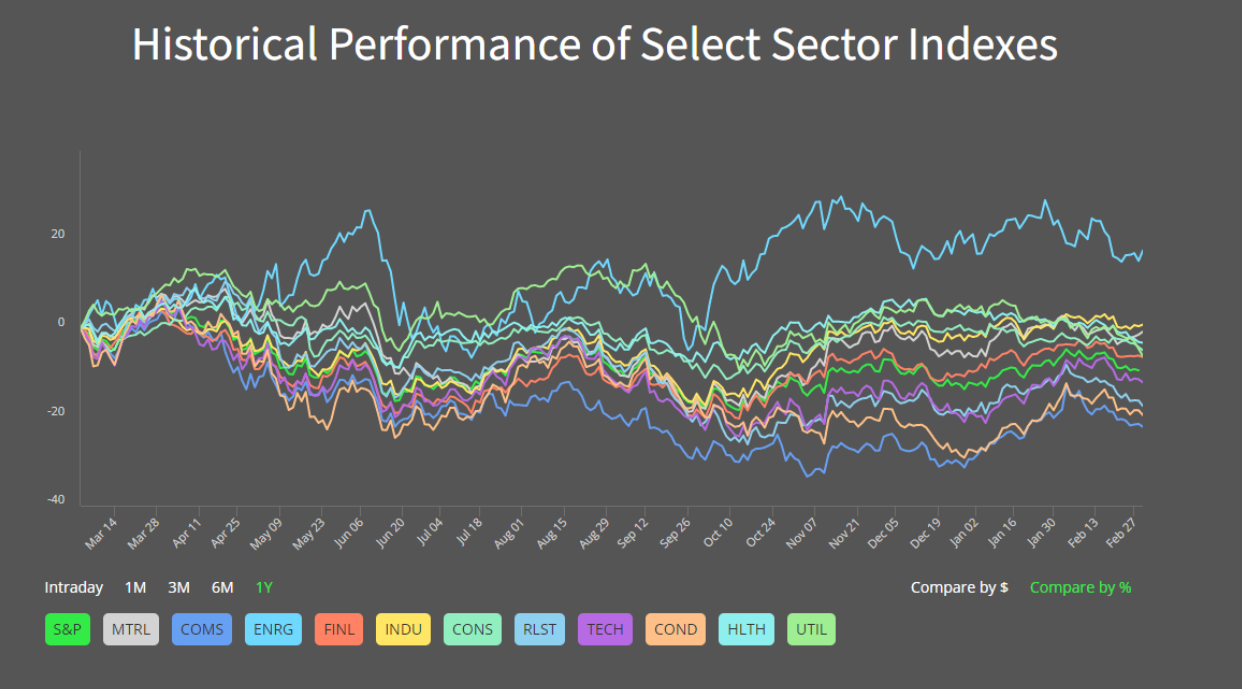
Source: Cboe Global Markets
The picture above illustrates the efficiency of a well-executed sector rotation. Note, for example, that as many as 7 sectors outperformed the S&P 500 Index between Jan. 02, 2022, and Feb. 27, 2023. With the continuation of volatility and uncertainty, savvy investors and portfolio managers can look to sector rotation as a defense mechanism in 2023.
Help protect your portfolio by learning more about Cboe’s Select Sectors Index Options here.
Featured Photo by Adeolu Eletu on Unsplash
This post contains sponsored advertising content. This content is for informational purposes only and not intended to be investing advice.
© 2026 Benzinga.com. Benzinga does not provide investment advice. All rights reserved.
To add Benzinga News as your preferred source on Google, click here.