


- WEF's survey revealed geopolitical tensions, climate change and disinformation as the three major global risks of 2025.
- Defense ETFs, Cybersecurity ETFs, Clean Energy ETFs are few that can provide optimal hedging without compromising on gains.
- Get special access to three exclusive "Top 10 Stocks" power lists today, updated daily.
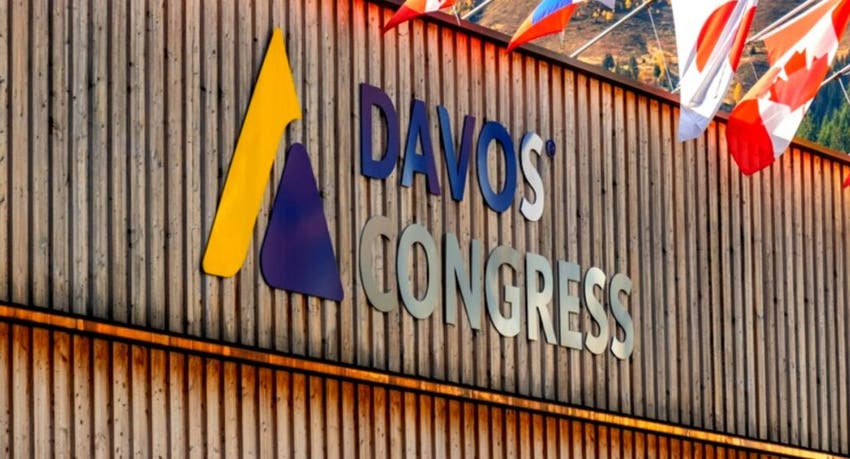
The World Economic Forum's (WEF) "Global Risks Report" for 2025 paints a sobering picture of the challenges ahead. The survey, released during the WEF’s annual meeting in Davos, Switzerland, highlights the risks of geopolitical tensions, climate change and disinformation.
These risks call for strategies to safeguard investments while capitalizing on emerging opportunities. Here’s how some ETFs could help investors sail smoothly through each global challenge mentioned in the survey.
Armed Conflict
According to the WEF report, 23% of respondents named state-based armed conflict as the most pressing risk for 2025. Persistent geopolitical tensions, such as the Russia-Ukraine conflict and the unrest in the Middle East, have shaken global trust.
In such a dire situation, defense ETFs and global security ETFs can save the day for investors. iShares U.S. Aerospace & Defense ETF ITA provides exposure to U.S.-based companies in the defense sector, which could benefit from increased government spending on military capabilities. Moreover, an expense ratio of 0.4% makes it a cost-effective option. Also, a beta of 0.97% means it is at slightly lower risk than the broader market during volatility.
In addition, the SPDR S&P Kensho Future Security ETF FITE focuses on innovative companies addressing global security challenges, including cybersecurity and physical defense. A glimpse of its top holdings include Viasat VSAT, Lockheed Martin LMT and F5 Networks FFIV. The fund boasts an expense ratio of 0.45%.
Extreme Weather
The climate crisis is intensifying the frequency and severity of weather events such as floods, heatwaves, and tornadoes. With environmental risks dominating the 10-year horizon, resilient investment strategies are the need of the hour.
Clean Energy ETFs are well-positioned to capitalize on this global challenge. Invesco Solar ETF TAN has holdings in solar energy companies like Enphase Energy Inc ENPH and First Solar Inc FSLR, which are poised to benefit from global decarbonization efforts.
Disinformation and Misinformation



For the second consecutive year, the scourge of misinformation and disinformation has been flagged by WEF as a top risk, leading to societal distrust, markets disruption, and heightened polarization.
Many tech companies are united in their efforts to curb the spread of misinformation as well as disinformation (there is a very thin line of intentions separating the two terms). However, among those most equipped to fight this menace are cybersecurity companies. Naturally, ETFs focusing on the cybersecurity sector stand to gain.
First Trust Nasdaq Cybersecurity ETF CIBR focuses on companies addressing cyber threats, which often fan the fire of misinformation. Stocks of companies like Broadcom, Inc. AVGO, Crowdstrike Holdings CRWD and Cisco Systems CSCO, prominent players in the cybersecurity space, are part of this fund’s holdings.
Media ETFs like the Communication Services Select Sector SPDR Fund XLC can also benefit from media firms, which are increasingly becoming content-conscious. Media firms may benefit from investing in trusted content creation and digital information technologies.
Why ETFs Are Ideal In Turbulent Times
Insights from over 900 global risk experts, policymakers and industry leaders in September and October last year were obtained to compile WEF’s survey report. Some of the other short-term risks that the WEF's report highlights include societal polarization, cyber espionage, pollution, and inequality.
In these turbulent times, investors seek to hedge their investments instead of holding back from the market. ETFs come into the picture as flexible, cost-efficient and concern-specific instruments that allow investors to diversify their portfolios across sectors and geographies during global uncertainties.
As Carolina Klint of Marsh McLennan Europe told CNBC, "I think we're navigating an era now marked by increasing economic tensions…And I think we have to recognize the fragmentation is not a theoretical concern. It is something that we need to confront today. So, it has resulted in a more complex and uncertain trading environment."
Building a resilient portfolio with ETFs aligned to global challenges can help investors power through 2025.
See Next:
Photo: Shutterstock
Edge Rankings
Price Trend
© 2025 Benzinga.com. Benzinga does not provide investment advice. All rights reserved.


