


In a new report, Morgan Stanley analyst Carmen Nuzzo discussed the ways inequality can impact the economics of a country and what that means for investors.
In addition, Nuzzo highlights the recent trends in inequality, particularly in developed markets (DMs).
Why Does Inequality Matter?
According to Nuzzo, inequality is not just about income, but includes imbalances based on education, health services, gender, age and race. In the long term, even the wealthiest participants in an economy have a vested interest in a certain degree of widespread income prosperity.
“If the distribution is too uneven with a persistent and widening gap between the top and the bottom of the scale, it prevents broad participation in the welfare gains of growth, and, over time, risks corroding the economic and social fabric of a country,” Nuzzo explained.
Is Inequality Getting Better Or Worse?
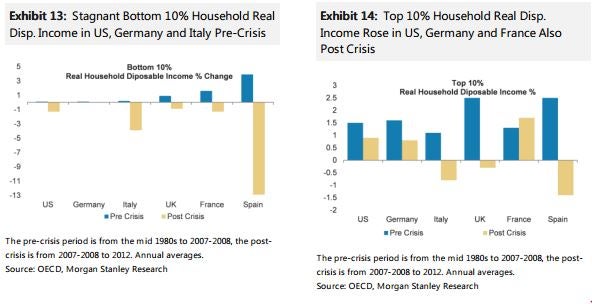
While inequality among different countries tends to be globally trending lower, income inequality within many DM countries has been on the rise in recent years.
Disposable income growth for the bottom 10 percent of earners in many DM countries has lagged the income growth of the top 10 percent both before and after the Financial Crisis.


Stock Picks
Morgan Stanley believes companies that are able to embrace complexity and have solid supply chains and technological advantages are well positioned to handle the growing inequality gap.
The firm's top stock picks include the following names:
- Constellation Brands, Inc. (NYSE: STZ)
- Estee Lauder Companies Inc (NYSE: EL)
- WhiteWave Foods Co (NYSE: WWAV)
- Mondelez International Inc (NYSE: MDLZ)
- Ryanair Holdings plc (ADR) (NASDAQ: RYAAY)
- Delta Air Lines, Inc. (NYSE: DAL)
- Spirit Airlines Incorporated (NASDAQ: SAVE)
Disclosure: The author holds no position in the stocks mentioned.
Image Credit: Public Domain© 2025 Benzinga.com. Benzinga does not provide investment advice. All rights reserved.


