Palantir Technologies Inc. (NASDAQ:PLTR) has deepened its defense ties with Ukraine, joining a broader push by tech firms to support the country's war effort against Russia. As AI reshapes modern conflict, Ukraine has become a testing ground for private‑sector battlefield technology.
The Denver-based company announced on January 20 that it would provide the Ukrainian defense ministry with a software platform, known as Brave1 Dataroom, to counter Russian drones. Brave1 will deploy real-time war data to protect Ukrainian airspace as the country faces a surge in Russian strikes.
The software will enable Ukraine to use "advanced military software and data infrastructure for developing next-generation algorithmic weapon systems," Palantir's Executive VP Louis Mosley said. "In the future, this will allow Ukraine to share with allies around the world the unique experience and capabilities gained in this war."
Moscow has maintained intense aerial attacks, putting Ukraine's defenses under tremendous stress. Ukraine's manual interception systems have struggled to defend against the sheer volume of Iranian Shahed-type kamikaze drones launched on Ukrainian cities, notably Kyiv and Kharkiv. Automated and AI-driven air-defense tools such as Brave1 will help counter that assault.
"Ukraine is developing autonomous air defense solutions that are already delivering results," Ukrainian Defense Minister Mykhailo Fedorov said on X. He praised Palantir's commitment to Kyiv after the deal.
Now, Ukrainian developers will have access to frontline visual and thermal datasets. Palantir's machine-learning system, Brave1, identifies, tracks, and neutralizes aerial threats. This is a departure from traditional air-defense tactics based on manual detection and targeting.
Palantir Is Part of a Wider Private AI War Effort
Palantir's expanded role is part of a wider effort in which private US and European tech firms have become indispensable to Ukraine's wartime operations.
Russia's invasion of Ukraine in 2022 spurred US companies to support Ukraine. US tech and investment firms, such as BlackRock Inc. and JPMorgan Chase & Co., have had a critical role in the country's war efforts.
Publicly traded companies, including Planet Labs (NYSE:PL) and BlackSky Technology (NYSE:BKSY), have supported Ukraine's digital and military infrastructure in ways that would have once seemed unlikely, or impossible, in previous conflicts.
EU Tech Committed to Supporting Ukraine
European tech companies, such as ICEYE, ARX Robotics, and Quantum Systems, have engaged in aiding Ukraine to fight against Russia.
Ukraine and the Finnish defense-tech company ICEYE signed an agreement in January to expand cooperation on space-based intelligence. This will allow the Ukrainian army to use satellite imagery for assessment of military developments on the frontline.
Quantum Systems, a German drone manufacturer and unicorn startup, has increased its drone production for Ukraine. Helsing, one of Germany's leading software and defense companies, has supplied its HX-2 drones to Ukraine.
US Tech War Involvement Raises Concerns
Private sector participation in the defense of Ukraine has raised questions, more broadly, about "the ability of states to govern, defend, and act independently," the Carnegie analysts wrote. Conflict "is increasingly mediated by private technology firms and global finance," they said.
Palantir's involvement in Ukraine has become one of the clearest examples of this shift.
Ukraine has functioned as an experimental field for weapon systems that may shape Western military doctrine, according to analysts. The country has emerged as a case study for the performance of private-sector AI systems under combat conditions. Brave1 is among the most prominent of these battlefield technologies.
Palantir Supports Ukraine's Digital Capabilities
Palantir has supported the enhancement of digital capabilities to conduct electronic public services and to increase Ukraine's digital resilience.
In 2023, Palantir signed memorandums and agreements with the Ministry of Digital Transformation, the Ministry of Economy, and the Ministry of Education to expand its analytical capabilities for defense, reconstruction, and strategic planning.
Ukraine War Spurs War-Tech Advances
Palantir's long partnership with Ukraine has spurred military and technological advancements across the globe, specifically among countries facing threats from aggressive neighbors.
Taiwan, for instance, has recruited commercial drone producers and aerospace firms to build up a domestic drone program amid intensifying tensions with China. The battlefield in Ukraine is reshaping how governments approach the integration of private‑sector AI into national defense.
However, doubts have arisen as to whether these technologies may end up in the hands of geopolitical adversaries.
US Tech Supports Kyiv Amid Trump Pressure
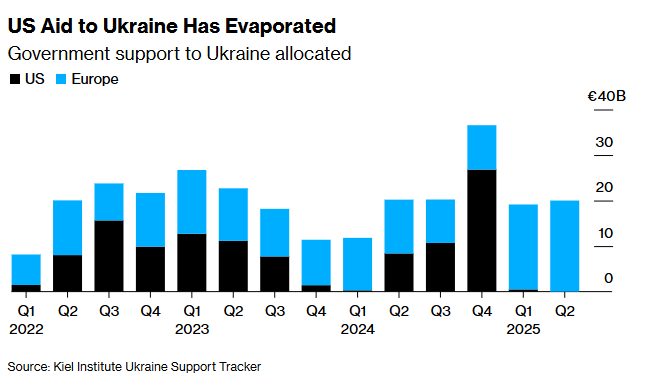
To complicate matters further, these technological shifts are unfolding against a backdrop of growing political uncertainty in Washington. The US private sector has maintained its support for Ukraine, even as the Trump administration winds down its financial aid.
The US has largely cut off its financial support, and Kyiv's funds will run dry by April. This divergence between government policy and private-sector engagement has added new uncertainty to Ukraine's strategic planning.
President Donald Trump has put pressure on Ukraine to make concessions in peace talks with Russia. The US has described the latest round of peace talks in Abu Dhabi as "productive" and "constructive." Ukrainian President Volodymyr Zelenskyy said that "it was too early to draw conclusions."
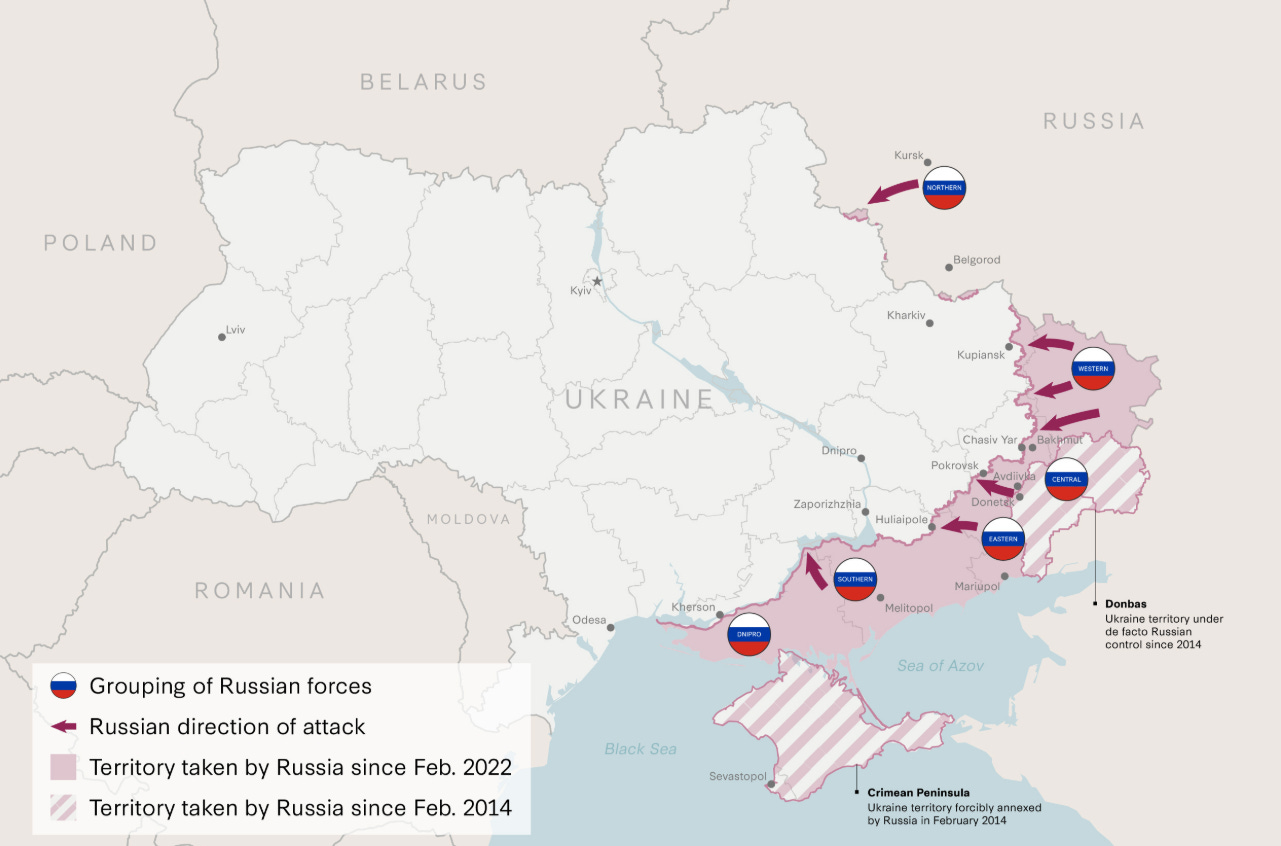
The key issue at stake remains the territorial concessions that Russia is demanding from Ukraine. The Kremlin has demanded Kyiv's withdrawal from Russian-annexed territories, including the Donbas, the industrial heartland in eastern Ukraine. The US proposal envisions a demilitarized and free economic zone in exchange for security guarantees for Ukraine.
Russia Lacks Tech-Backed Depth
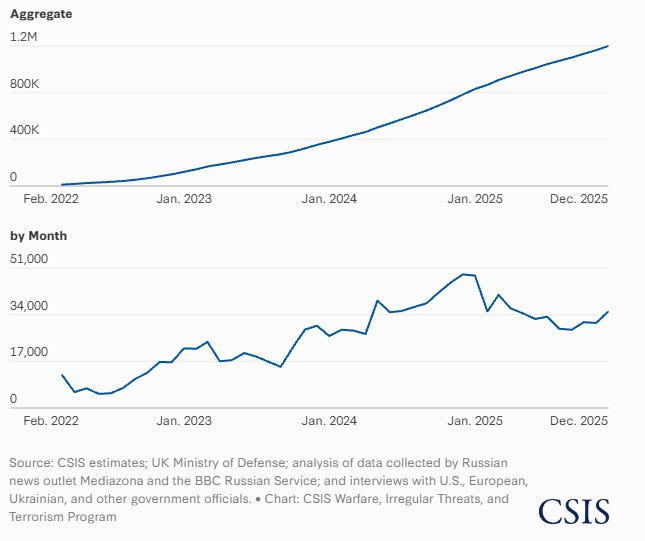
Unlike Ukraine, Russia has no capital- and tech-rich companies supporting its war efforts. That support has helped Kyiv slow Russia's advances, and at a terrible cost to human life.
Ukraine has relied on decoys and deception, supported by US and homegrown technology. Ukraine's use of private-sector AI — and Palantir's expanding role — has shaped the country's defense posture.
"No major power has suffered anywhere near these numbers of casualties or fatalities since World War II," CSIS said of Russia.
Disclaimer: Any opinions expressed in this article are not to be considered investment advice. They are solely those of the authors. European Capital Insights is not responsible for any financial decisions made based on the contents of this article. Readers may use this article for information and educational purposes only.
Benzinga Disclaimer: This article is from an unpaid external contributor. It does not represent Benzinga’s reporting and has not been edited for content or accuracy.
© 2026 Benzinga.com. Benzinga does not provide investment advice. All rights reserved.
To add Benzinga News as your preferred source on Google, click here.