


The Trump administration, on Wednesday, is reportedly planning to propose a significant relaxation of the fuel economy standards set by the previous Biden administration.
NHTSA set to ease fuel rules for 2022–2031
The National Highway Traffic Safety Administration (NHTSA) is expected to suggest a substantial decrease in the fuel economy requirements for vehicles manufactured between 2022 and 2031, Reuters reported, citing sources.
President Donald Trump is expected to unveil the proposal at a White House event on Wednesday, joined by senior executives from the three major U.S. automakers.
Earlier this year, Trump approved a bill that scrapped fuel-economy penalties for automakers, and NHTSA confirmed that it is reviewing fines retroactively applicable to the 2022 model year. Stellantis N.V. (NASDAQ:STLA), the parent company of Jeep and Dodge, has paid more than $190.6 million in new fines for failing to meet U.S. fuel-economy standards — $78.3 million in March and $112.3 million in June for its 2019 and 2020 models.
Trump’s Rollback Signals Pro-ICE Shift
The proposed rollback of fuel economy standards is the latest in a series of moves by the Trump administration to ease regulations on gas-powered vehicles.
The administration ended the $7,500 federal EV tax credit effective September 30, drawing criticism even from Trump ally and Tesla (NASDAQ:TSLA) CEO Elon Musk. It also moved to roll back CAFE fuel-economy standards, easing emissions requirements and reducing the need for zero-emission vehicle credits.
In a further pro-ICE shift, the Environmental Protection Agency (EPA) proposed reversing the 2009 Endangerment Finding, a key legal foundation for U.S. climate and emissions rules.
Earlier in March, the EPA announced plans to revisit the 2024 rules that aimed to reduce passenger vehicle emissions by almost 50% by 2032. Those standards anticipated that 35% to 56% of new vehicles sold between 2030 and 2032 would need to be electric, a target backed by Ford Motor Co. (NYSE:F).
Impact On EV Makers
The Trump administration’s decision to relax emissions norms and promote internal combustion engine (ICE) vehicles over electric ones has also had a significant impact on electric vehicle (EV) manufacturers. In August, it was reported that Rivian (NASDAQ:RIVN) faced a nearly $100 million revenue shortfall due to the Trump administration’s rollback of fuel economy rules. The NHTSA’s decision to halt the issuance of paperwork needed to finalize credits has caused a significant delay in revenue for Rivian and its competitors.
Tesla has urged the EPA not to repeal emissions standards tied to the 2009 Endangerment Finding, warning that doing so would disrupt the auto industry, threaten U.S. leadership in the sector, and eliminate revenue from ZEV credits, which earned Tesla nearly $2.8 billion.
READ NEXT:
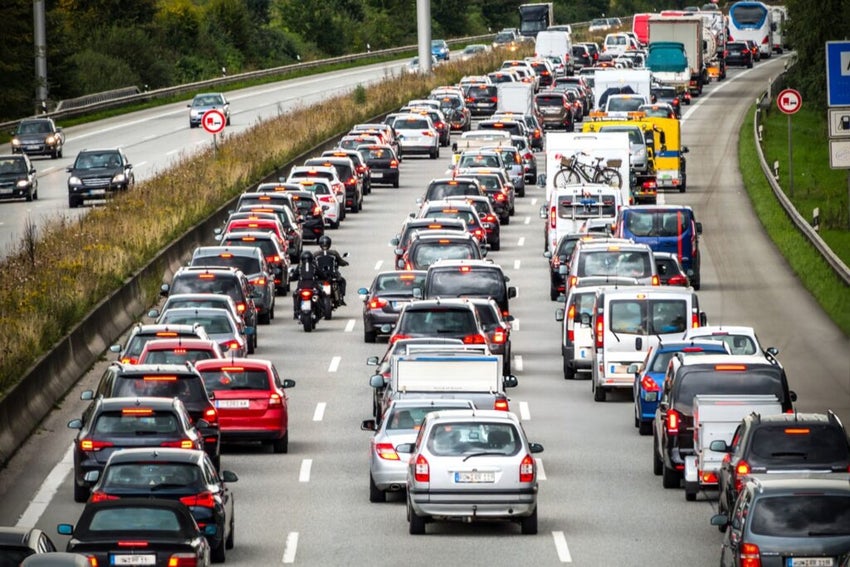
Image via Shutterstock
Disclaimer: This content was partially produced with the help of AI tools and was reviewed and published by Benzinga editors.
© 2025 Benzinga.com. Benzinga does not provide investment advice. All rights reserved.


