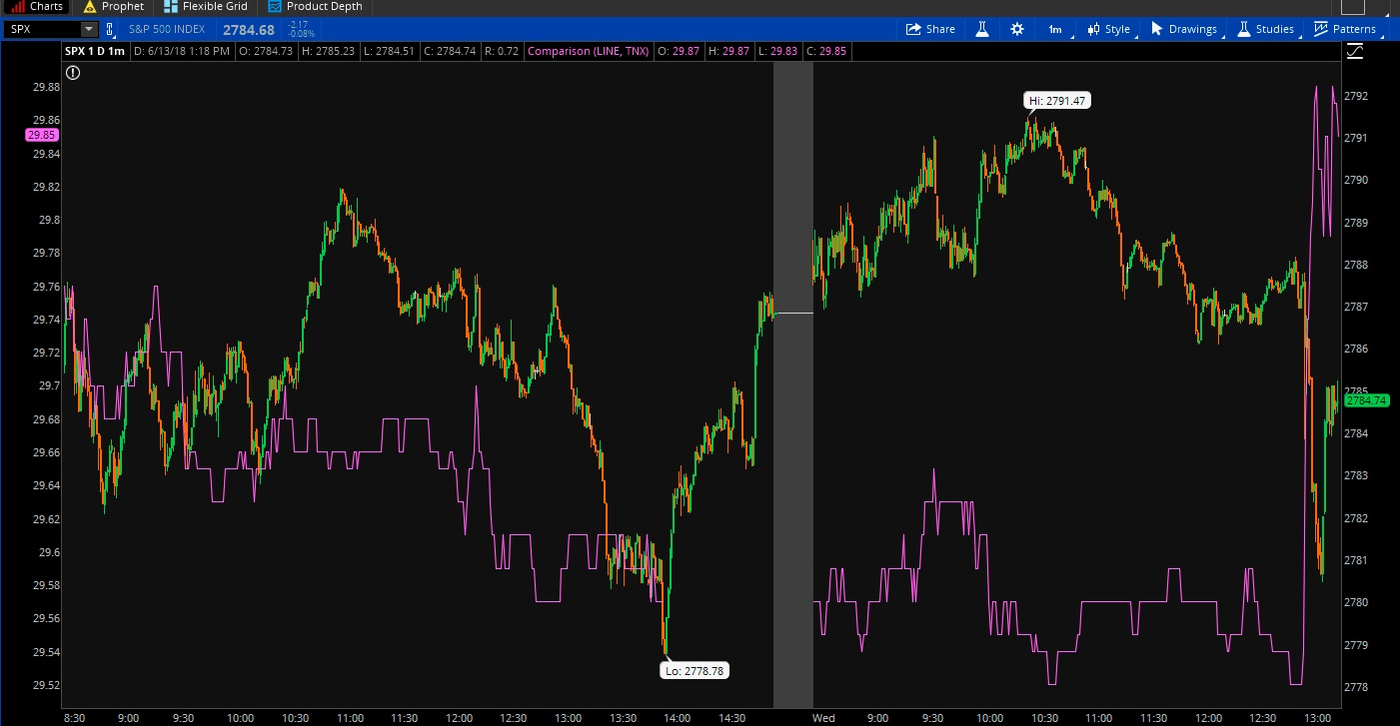
The Fed raised its benchmark interest rate Wednesday as expected, and included more hawkish language in a statement indicating a stronger economic outlook.
With the hike already priced into the market, investors were likely keen to hear what policy makers thought of recent price and wage data and what the numbers could portend for the central bank’s next move.
Although the central bank kept the word “accommodative” to describe its monetary policy, its statement accompanying the rate hike was more hawkish. For example, it replaced an instance of talking about rate changes as “adjustments” in favor of the word “increases” and added a phrase on “sustained expansion of economic activity.”
It also dropped a phrase about keeping rates low to boost the economy “for some time.”
Policy makers were more upbeat in their economic outlook. They indicated that they upgraded their assessment of economic growth from “moderate” to “rising at a solid rate.”
On another note, in his post-decision press conference Fed Chair Jerome Powell said starting in January the Fed will hold press conferences after every one of its eight annual meetings instead of just quarterly. This is designed to give the Fed “more opportunities to explain our actions and take your questions,” Powell said, adding that the decision “doesn’t signal anything” about the timing or pace of future rate changes.
In his remarks, Powell struck an upbeat tone about the economy. “The main takeaway is the economy is doing very well,” he said at the start of the press conference. Inflation, he added, is moving closer to the Fed’s 2 percent objective, but “it’s too early to declare victory.” He noted that inflation could be a bit above 2 percent in coming months due to high energy prices, but doesn’t see a long-term impact from that.
Trying to Strike a Balance Amid Crosscurrents
The Fed marched into this meeting facing some critical questions. Notably, is it ready to push U.S. rates much higher over the next few months even as central banks in Europe and Japan seem to be remaining accommodative as the gap between rates in Europe and the U.S. widens? There’s a sense that Powell and company might not want to let that spread between U.S. and European rates get too out of whack for fear of potentially upsetting the trade balance.
During his press conference, Powell addressed the question of how much higher the Fed might raise rates if it wants to get them back to a neutral level where they’re not too stimulative or start to compress economic growth. Basically, he said that the Fed will just have to continue watching the data come in. He didn’t say where a neutral rate might be.
The updated Fed “dot plot” looking at individual Fed members’ projections for rates over the next few years showed eight Fed policy makers expected four or more quarter-point rate increases for the full year, compared with seven officials during the previous forecast round in March. The number viewing three or fewer hikes as appropriate fell to seven from eight. The median estimate implied three increases in 2019.
From an inflation standpoint, Powell said the Fed sees prices rising at a median of 2.1 percent through 2020 and sees unemployment at 3.5 percent over the next two years. Predictions are only predictions, but if the Fed is right, numbers like that might be welcomed by many stock market investors.
Tariffs Could Be Ticklish Issue for Fed to Tackle
Prior to the announcement and press conference chances for a hike by September stood at around 71 percent while chances for a fourth hike by the end of the year were around 45 percent. While the odds for a hike by September stayed about the same after the Fed announced its decision Wednesday, chances for a fourth hike climbed above 50 percent shortly after the news.
Other Central Bank Action in Focus
Recent Inflation Data
Beyond Monetary Policy
After the market digests news from the Fed and other central banks this week, investors may turn their focus back to geopolitics and corporate news. The trade spat between the U.S. and key trading partners could take center stage. And the market might continue watching for progress on talks between the U.S. and North Korea about denuclearizing the Korean Peninsula. In the absence of corporate earnings news, these headlines could move the market up or down.
Information from TDA is not intended to be investment advice or construed as a recommendation or endorsement of any particular investment or investment strategy, and is for illustrative purposes only. Be sure to understand all risks involved with each strategy, including commission costs, before attempting to place any trade.
© 2026 Benzinga.com. Benzinga does not provide investment advice. All rights reserved.
To add Benzinga News as your preferred source on Google, click here.