This post contains sponsored advertising content. This content is for informational purposes only and not intended to be investing advice.
AT-A-GLANCE
- To keep up with the U.S. organic industry’s 12th consecutive year of growth, U.S. certified organic acres reached 9.1 million in 2021
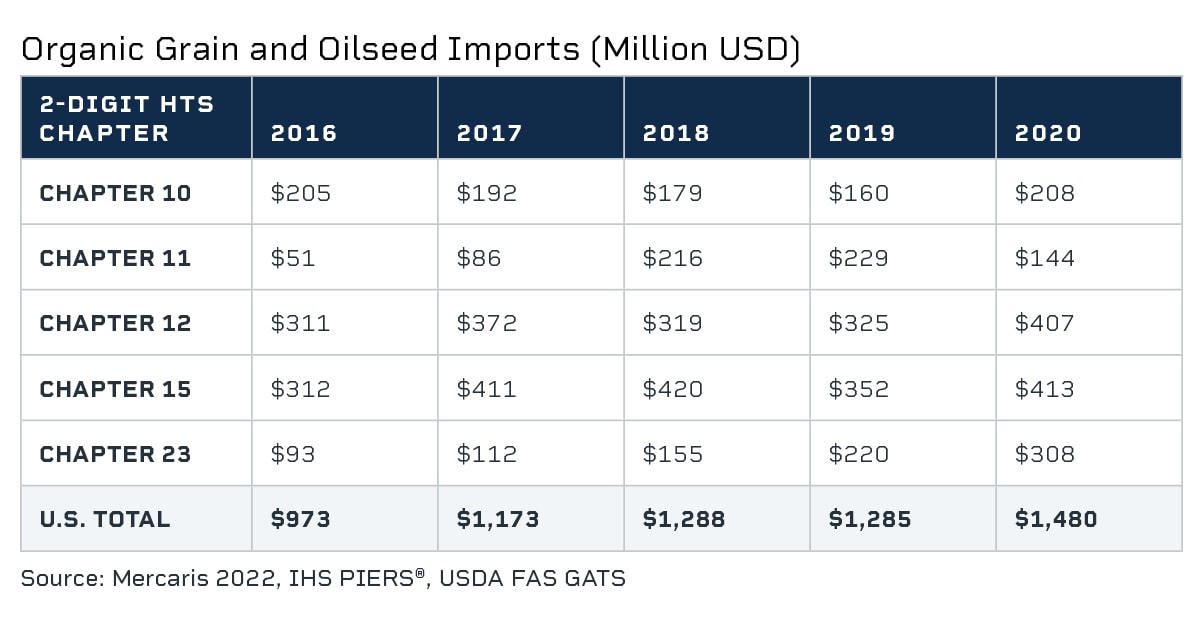
- U.S. imports of organic commodities, particularly for livestock and poultry feed ingredients, continue to grow, creating a new level of price risk
A dramatic transformation of the food industry, driven by a stunning array of consumer choices, has taken place over the past 30 years.
Imagine walking the dairy aisle in 1990 compared to 2022. Options have expanded beyond the choice of merely ‘whole vs. skim milk’ to include organic milk, grass-fed milk, an array of plant-based milks, lactose-free milk… and the list goes on. This exercise can be repeated on virtually any aisle, with products from coffee to eggs to meat.
Scan the above QR code for more expert analysis of market events and trends driving opportunities today!
Once viewed as a fad within the broader agriculture industry, persistent growth led by expanding consumer demand has established U.S. organic agriculture’s place at the table.
According to data produced by the U.S. Organic Trade Association (OTA), U.S. organic sales reached nearly $62 billion in 2020 as the industry achieved its 12th consecutive year of growth. Organic food sales alone eclipsed $56 billon, accounting for more than 3% of all U.S. food expenditures. Within certain categories, like dairy and some fresh vegetables, organic market share has approached or exceeded double digits.
While growth in U.S. organic production has been remarkable, it has not been without growing pains.
Supply Chain Risks
On one hand, organic commodities markets are just that – markets that are subject to the pressures of supply and demand. On the other hand, the relative lack of transparency, thinness of the markets themselves, and pace of growth all combine to amplify risks for everyone, from producers to consumer-packaged goods companies.
Find More Organics Data from Mercaris on CME Datamine
For example, U.S. organic soybean markets have proven to be particularly exposed. Attributable to the rapid growth in organic poultry production, U.S. imports of organic soybeans and soybean meal reached 241,000 MT and 427,000 MT, respectively, over the 2020/21 marketing year.
While consumer demand has been the driver for an increase in organic agricultural production for over 20 years, access to robust, independent third-party data and analysis is only more recently available. Through private sector sources like Mercaris, as well as limited USDA reports, these data and insights are helping to create more transparency in the space.
This post contains sponsored advertising content. This content is for informational purposes only and not intended to be investing advice.
© 2026 Benzinga.com. Benzinga does not provide investment advice. All rights reserved.
To add Benzinga News as your preferred source on Google, click here.