


The revived merger talks between Rio Tinto Plc (NYSE:RIO) and Glencore Plc (OTC:GLCNF) are rapidly shifting less about scale and more about subtraction, particularly, what happens if coal is removed from the picture. As far as ETFs are concerned, this could be a very differentiating carve-out.
The Coal Conundrum: Spin-offs and Carve-outs
At the heart of this debate is Glencore's coal franchise, which contributes about 8% to the EBITDA of the combined group, but has increasingly gotten into an awkward territory for institutional and ESG-sensitive investors. There are two options to sort this out. One is separating out coal into a separately listed vehicle, as BHP Group Ltd (NYSE:BHP) did with South32 Ltd (OTC:SOUHY) a decade ago. And the second is a pre-merger spin-out, or even a narrower Rio bid focused on copper alone.
Creating a Copper Super-Major
In the case of copper and industrial metals ETFs, the effects are profound. The resulting entity between Rio and Glencore would control approximately 7% of the world's copper production and become the dominant force in copper production immediately upon closing.
This is likely to increase its sector representation in copper ETFs like Global X Copper Miners ETF (NYSE:COPX) and overall material ETFs like iShares MSCI Global Metals & Mining Producers ETF (BATS:PICK). With copper prices now above $13,000 a ton and the IEA forecasting demand growth of up to 50% by 2040, these ETFs are increasingly seen as proxies for electrification, data centers, and grid expansion.
The ETF Ripple Effect: COPX, PICK, and XME
A coal spinoff also introduces another ETF storyline. Pure-play coal funds, such as the Range Global Coal Index ETF (NYSE:COAL), could eventually find themselves exposed to a newly listed, cash-generative coal pure-play that may enhance yield appeal for investors less sensitive to ESG screens.
Meanwhile, diversified mining ETFs might experience reduced coal weightings, improving their ESG optics practically overnight. Funds like the SPDR S&P Metals & Mining ETF (NYSE:XME) take a more equal-weighted approach and include a mix of diversified miners, steelmakers, and specialty metals companies. While it has indirect coal exposure through diversified producers, a coal carve-out would reduce the fund’s fossil fuel sensitivity and raise its exposure to cyclical metals tied to construction, power grids, and data centers. Over time, this could lead investors to view XME as offering broader exposure to industrial metals linked to the energy transition rather than traditional resource cycles.
Cleaning Up the Sector for ESG Inflows
That factoring of “cleaner miner” matters. ESG-focused materials and climate-aligned ETFs — including funds that are currently underweight diversified miners due to fossil fuel exposure — could reconsider Rio-Glencore exposure if coal is structurally removed. This supports inflows into ESG-screened global equity ETFs that have traditionally struggled to square energy transition demand with mining realities.
Finally, any spinoff or partial asset deal comes with the risk of index rebalancing for MSCI, FTSE, and S&P benchmarks, causing short-term volatility for passive ETFs linked to those indices.
In other words, when coal gets its own listing while copper takes the headline act, this is no longer a niche for ETFs to passively watch but one they’ll be forced to rebalance alongside the energy transition itself.
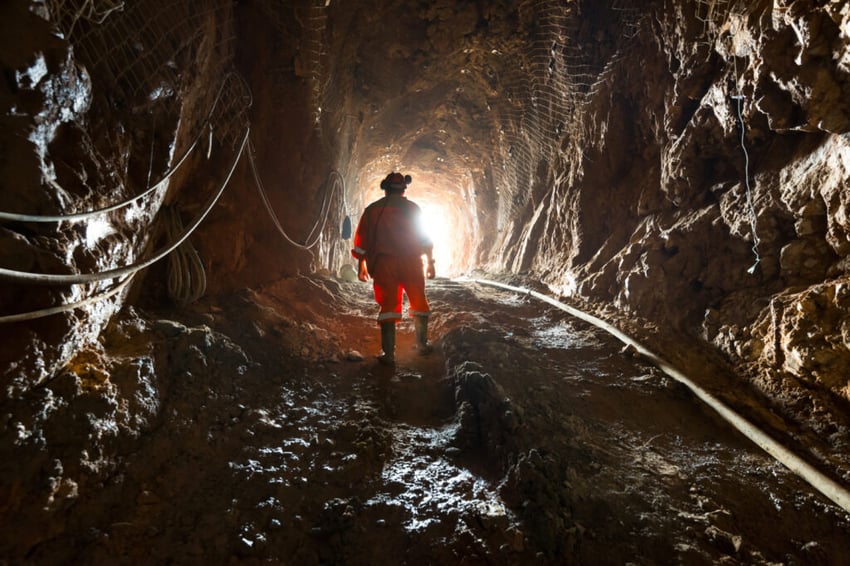
Photo by Jose Luis Stephens via Shutterstock
© 2026 Benzinga.com. Benzinga does not provide investment advice. All rights reserved.


