
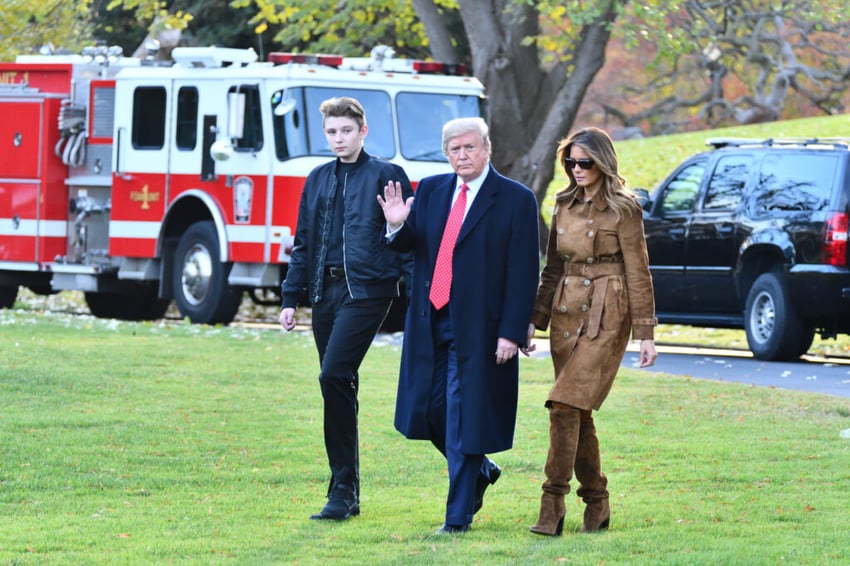
First Lady Melania Trump‘s former immigration attorney criticized Sen. Bernie Moreno‘s (R-Ohio) bill that would require U.S. citizens to renounce any foreign citizenship they hold, thus ending dual citizenship.
Impact Of New Bill On First Lady And Barron Trump
Michael Wildes, immigration attorney, law professor, and Englewood mayor who previously represented First Lady Trump for clarification on her immigration status, told Newsweek in an interview on Wednesday that the new proposal to scrap dual citizenship in the U.S. holds no real weight.
Notably, the First Lady and Barron Trump, her son with President Donald Trump, hold dual citizenship in Slovenia and the U.S.
He said a bill without legal force is "just a piece of paper," adding that the U.S., like many nations, allows dual citizenship whether gained through naturalization or by birth.
He noted that several early American leaders, including some presidents, were dual nationals, and argued it's absurd to question the loyalty of non-citizen service members or dual citizens.
Moreno’s Bill To End Dual US Citizenship
The bill, named the “Exclusive Citizenship Act of 2025,” introduced by the Ohio Republican earlier this week, would require U.S. citizens to have exclusive allegiance to the U.S. The bill would also require individuals with dual citizenship to formally renounce their foreign citizenship within a year of the bill’s enactment.
Failure to comply with this requirement would result in the individual being considered to have voluntarily relinquished their U.S. citizenship. The bill also mandates the Secretary of State to establish regulations and procedures for the declaration, verification, and record-keeping of exclusive citizenship.
Moreno, the bill’s sponsor, stated, “Being an American citizen is an honor and a privilege — and if you want to be an American, it's all or nothing. It's time to end dual citizenship for good.”
If passed, the bill would take effect 180 days after it becomes law.
Trump Moves To Redefine US Citizenship
The proposal to end dual citizenship in the U.S. comes in the wake of the Trump administration’s efforts to tighten the country’s immigration policies. In September 2025, the administration was reported to be planning a more challenging U.S. citizenship test, potentially introducing an essay requirement. This move was part of the administration’s push for stricter legal immigration pathways and increased scrutiny of applicants’ “good moral character.”
Moreover, the Trump administration had also appealed to the U.S. Supreme Court to rule on the legality of an executive order that sought to end birthright citizenship under specific conditions. These developments indicate a broader effort to redefine and restrict the parameters of U.S. citizenship.
Meanwhile, in November, USCIS submitted a draft Form I-140G to the Office of Management and Budget (OMB), moving the Trump Gold Card program closer to launch. The visa targets individuals who can offer a "substantial benefit" to the U.S. Applicants must pay a non-refundable fee, provide timely documents, and, if approved, make a $1 million gift before receiving permanent residency under EB-1 or EB-2.
READ NEXT:
Image via Shutterstock
Disclaimer: This content was partially produced with the help of AI tools and was reviewed and published by Benzinga editors.
© 2026 Benzinga.com. Benzinga does not provide investment advice. All rights reserved.


