Welcome to the last trading week of the decade.
The market is in the middle of the Santa Claus rally period—so-called because the last five trading days of the year and the first two of the new year are often kind to stocks.
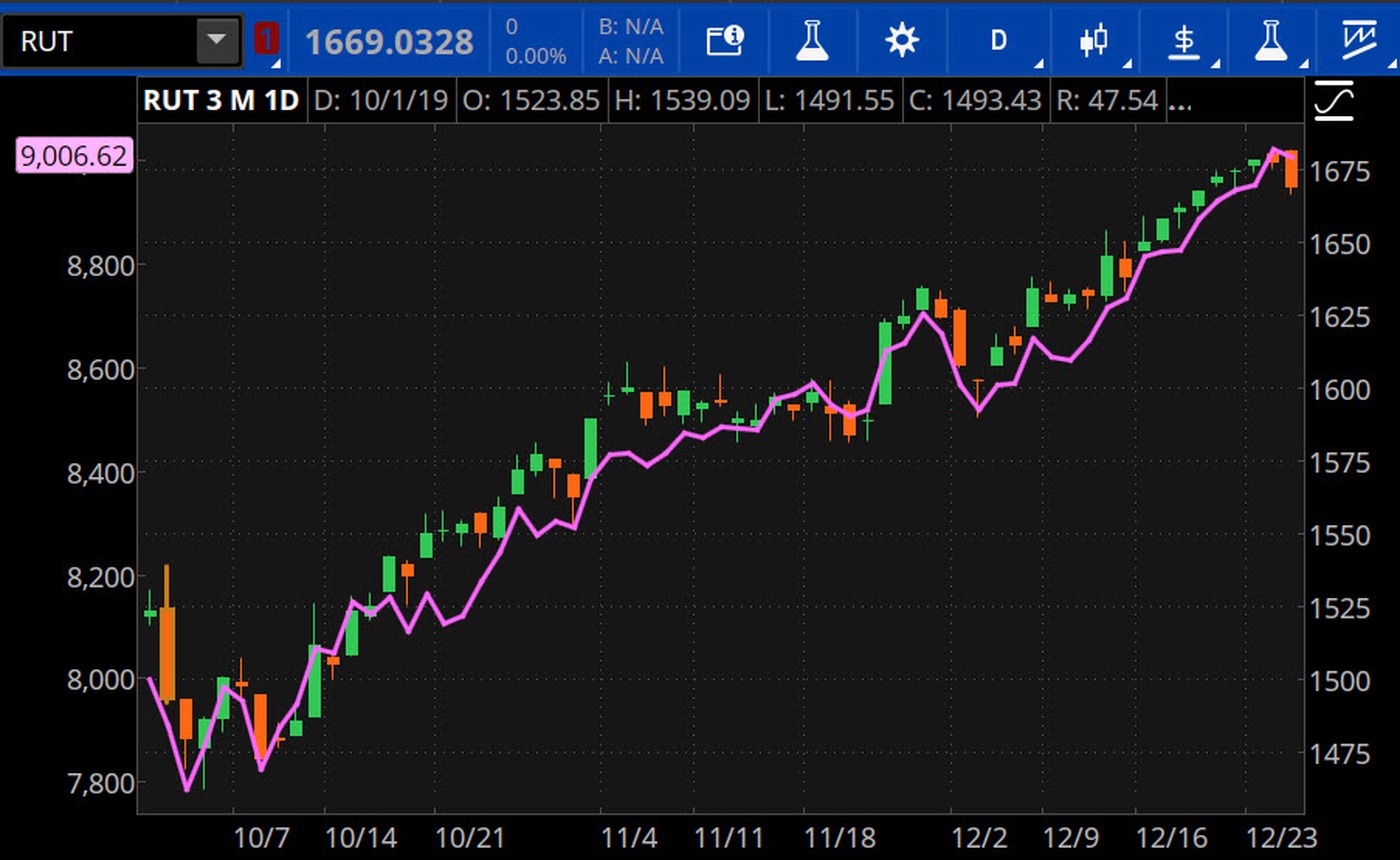
This rally has been fueled by strong retail industry news, encouraging industrial profit numbers from China, and continued optimism about a U.S.-China trade deal getting signed next month and helping to ease worries about global economic growth and corporate performance that have dogged the market for the better part of two years.
What a difference a decade makes. We close out the 2010s with expectations of a trade deal, which has contributed to a string of market records. This is a marked difference in market performance versus the beginning of the decade, when stocks were still licking fresh wounds from the financial crisis.
But one thing 2019 had in common with the early years of the outgoing decade—easier monetary policy. Though the Federal Reserve had started to wind down the zero interest rate policy and quantitative easing that helped fuel the rally in the decade’s early years, some feared the Fed was pumping the brakes a bit too hard by the end of 2018. A return to easy policy has helped stocks soar to new heights in 2019.
This morning, the market was looking at a flattish open for the main three U.S. indices. Yet Wall Street’s main fear index, the Cboe Volatility Index (VIX) was up more than 3% this morning and approaching 14. Saber rattling from North Korea could have something to do with the jitters, but it could also reflect some possible nervousness about the trade deal since it hasn’t actually been signed yet.
Or, the VIX could simply be reflecting a general note of caution as we head for the new year—as if the mid-month falloff in the VIX may have overshot the mark. Since December 10, the VIX traded as high as 16.9 and as low as 11.7. Since then, it’s been chopping higher, despite market gains.
Review And Look Ahead
The market ended mixed on Friday, with the Dow Jones Industrial Average ($DJI) and S&P 500 Index (SPX) finishing with mild gains but the Nasdaq Composite (COMP) ending its winning streak. Still, all three of the main U.S. indices hit intraday record highs and the SPX and $DJI managed record closes.
Last week saw thin trading volumes, as might be expected during a holiday week. Volumes might also be on the light side this week given that New Year’s Day falls midweek.
This week’s economic calendar is a bit heftier than last week, but there are still a couple of reports on the schedule that have historically had a high impact on the day’s trading.
On Tuesday, investors and traders are scheduled to get the Conference Board’s Consumer Confidence Index for December, and the ISM’s December manufacturing index is scheduled to come on Friday. (See more below.)
Consumers Confident: A Briefing.com consensus expects the Consumer Confidence Index to come in at 128 this week. That would be an increase from November’s 125.5 reading.
Information from TDA is not intended to be investment advice or construed as a recommendation or endorsement of any particular investment or investment strategy, and is for illustrative purposes only. Be sure to understand all risks involved with each strategy, including commission costs, before attempting to place any trade.
Image Sourced from Pixabay
© 2026 Benzinga.com. Benzinga does not provide investment advice. All rights reserved.
To add Benzinga News as your preferred source on Google, click here.