This post contains sponsored advertising content. This content is for informational purposes only and not intended to be investing advice.
AT-A-GLANCE
- The start of Fed hiking cycles tends to coincide with a strong economy which can help to lift cyclical sectors such as materials, industrials and energy
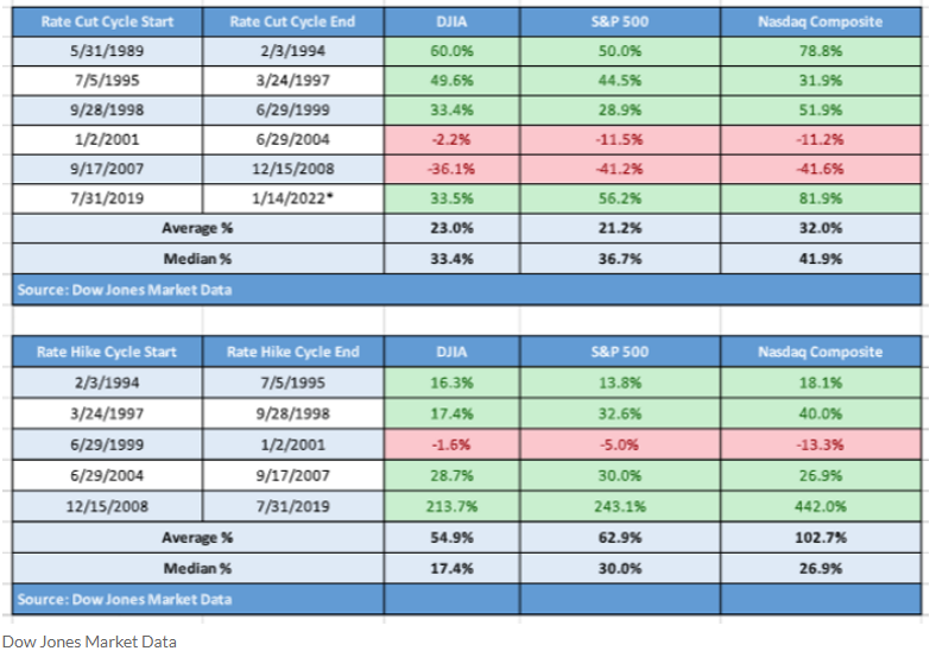
- The S&P 500, Dow Jones and Nasdaq composite have overall positive returns during Fed rate hike cycles dating back to 1989
The Federal Reserve is expected to increase its benchmark rate several times this year to tame stubbornly high inflation. Expectations are anywhere from four to seven hikes this year.
When the Fed raises its benchmark interest rate, banks and lenders tend to raise borrowing costs, too. Mortgages, credit cards and other debt become pricier, reducing consumer spending and demand. Businesses also pay more to finance their operations. If rates rise, investors may see more value in bonds, certificates of deposit and other assets thought to be less risky than stocks.
Why Does the Stock Market Care?
As a rule, the market cares for a couple of reasons. One is the potential slowdown of the U.S. economy and the other is the prospect of other investments like bonds becoming more attractive relative to stocks. The implications are that rates are going up to slow (not stop) the rate of economic growth. A strong economy can be very good for companies, but a tightening of monetary policy will put pressure on economic activity.
If rates rise, investors may see more value in bonds, certificates of deposit and other assets thought to be less risky than stocks. However, history paints a different picture.
This post contains sponsored advertising content. This content is for informational purposes only and not intended to be investing advice.
© 2026 Benzinga.com. Benzinga does not provide investment advice. All rights reserved.
To add Benzinga News as your preferred source on Google, click here.