
US President Donald Trump arrived in Europe today to take part in a North Atlantic Treaty Organization (NATO) summit, days after American forces struck three Iranian nuclear targets. The strikes aimed to end the Islamic Republic's efforts to develop nuclear weapons.
While the summit in The Hague, Netherlands, will mostly focus on NATO members increasing their defense spending to 5% of GDP, a Trump request, the Middle East will cast a shadow over the event. Ahead of the summit, the United Kingdom, France, and Germany have expressed concern about the wider escalation in the conflict.
"France has taken note with concern of the strikes carried out last night by the U.S. against three sites in Iran's nuclear program," the French Ministry of Foreign Affairs said in a statement. "We urge the parties to exercise restraint in order to avoid any escalation that could lead to an extension of the conflict."
Other European Union (EU) countries have echoed the French sentiment. Ambassador Barbara Woodward, the UK’s Permanent Representative to the UN, urged all parties to return to the negotiating table and find a diplomatic solution to prevent further escalation and bring this crisis to a close.
US Deploys Bunker Buster Bombs in Air Raid Over Iran
The US attack on Iran's Fordow, Natanz, and Isfahan nuclear sites came after initial Israeli bombardments on June 13 and 14. The US strikes, codenamed "Operation Midnight Hammer," consisted of 14 30,000lbs GBU-57 "bunker buster" bombs deployed by US B-2 stealth bombers and around 30 Tomahawk missiles fired from US submarines.
The strikes initially sent crude oil prices 23% higher, to $79.60 per barrel, before pulling back 15% following Iran's retaliation. Markets stabilized after Trump announced on Truth Social on Monday that Israel and Iran have agreed to a “complete and total ceasefire.”

The agreement will be implemented in phases over a 24-hour period, potentially ending what he called “THE 12 DAY WAR” between the two nations.
Market concerns also eased after Trump said the US would hold off retaliating after Iran fired missiles at the American base in Qatar. Approximately 10,000 US troops are stationed at Al Udeid Air Base in Qatar.
Trump vowed Tuesday that Iran will "never rebuild" its nuclear program, as Tehran's atomic chief claimed arrangements are already being made to restore the bombed sites. "IRAN WILL NEVER REBUILD THEIR NUCLEAR FACILITIES!" Trump declared in a Truth Social post.
US Strikes Raise Fears About Geopolitical Fallout
The attacks have raised fears that the strikes would lead to geopolitical instability and a surge in oil prices, particularly if Iran carried through with its threat to shut the Strait of Hormuz. Approximately one-third of the world’s oil supply passes through the strait daily.
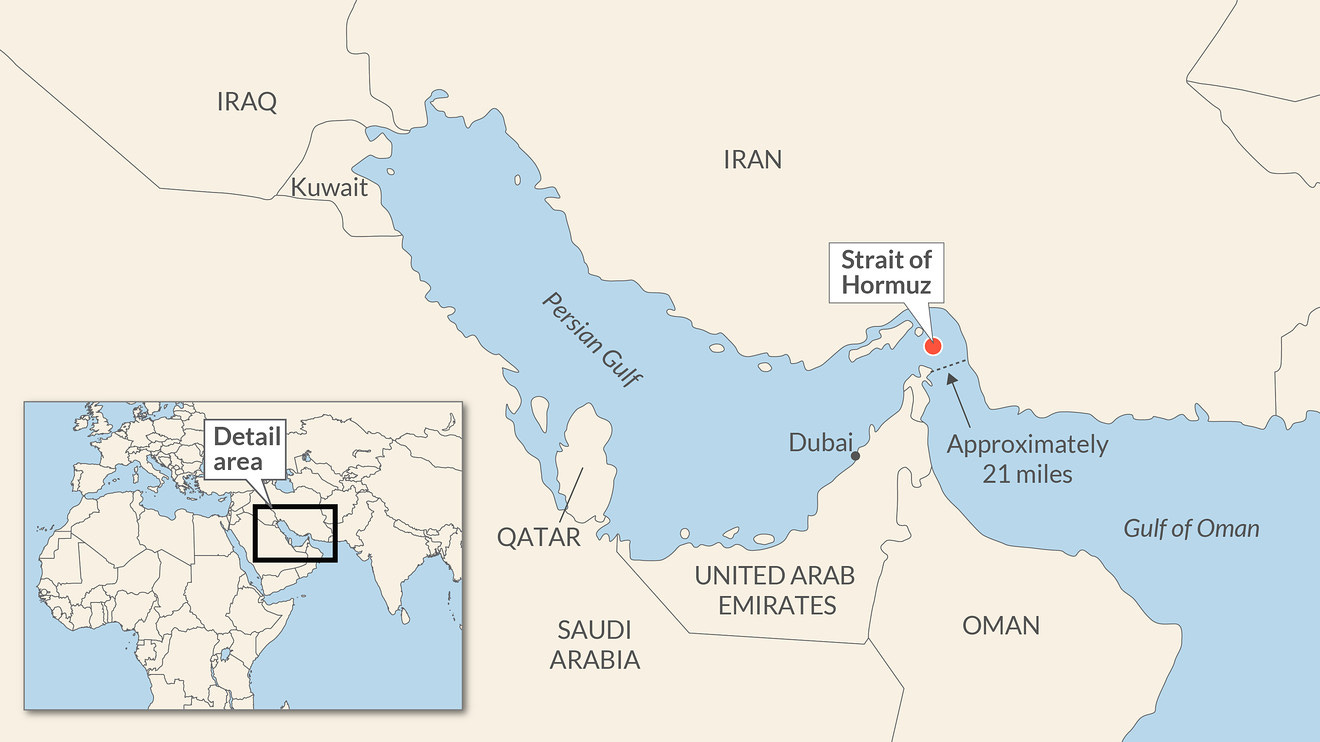
Iran's parliament voted unanimously on June 22 to urge the closing of the Strait of Hormuz in retaliation, according to France 24. The narrow passage located off Iran's southern coast serves as the link between the Persian Gulf, the Gulf of Oman, and the wider Arabian Sea.
"A big risk for markets – and oil prices in particular – would be from a sustained blockade of the Strait of Hormuz, the narrow waterway separating Iran from the Gulf states," Gregor Hirt at Allianz Global Investors wrote. "Around 20 million barrels a day passes through the strait and Iran has previously threatened to close it in the event of an attack."
A blockade would likely lead to a significant surge in oil prices and pose a negative impact on equity markets, but "we do not think a blockade is likely at this point," Hirt wrote. "Even if it occurred, and the oil price reached $ 90-10 a barrel, "the impact would likely be only temporary as OPEC could increase production."
For Europe, a sharp rise in oil prices would cause the European Central Bank (ECB) to rethink its monetary policy. Still, according to ECB research from 2022, Europe might have more leeway to endure short-term shocks than the world believes. According to research, a 40% spike in oil prices resulted in a decline of just 0.8% in the euro zone’s annual output.
Iranian Threat to Close Hormuz Is Unlikely
Arguably, closing the strait would ultimately be self-defeating for Tehran. Iran exports 1–2 million barrels per day into the world’s oil supplies.
Iran's exports would "summarily halt," Emily Harding, director of the Intelligence, National Security, and Technology Program at the DC-based Center for Strategic and International Studies, wrote on June 22. "This would be a pyrrhic victory for Iran. Oil is its lifeblood."
Another factor in this decision will be Iran's allies in Beijing. China receives 90% of Iran's total oil exports, with around 45% of its total oil supply passing through the Strait of Hormuz.
"Of course, China is worried," Gedaliah Afterman, China and Middle East expert at Israel's Abba Eban Institute for Diplomacy and Foreign Relations, told the Financial Times just two days before the US strikes. "If this situation continues to escalate, then they lose quite a bit, both in terms of their energy security and Iran as a strategic card that China holds."
Goldman Sachs analysts also stated that a blockade is unlikely due to Iran's reliance on the strait and pressure from allies, such as China, to keep it open.
Europe Calls for End of Hostilities, Opposition to Iranian Nukes
Europe has simultaneously called for an end to hostilities while expressing opposition to Iran getting nuclear weapons. British Prime Minister Keir Starmer called Iran's nuclear ambitions a "grave threat to international security" in a Sunday address.
Starmer added that "it is important that we now de-escalate the situation, stabilize the region and get the parties back around the table to negotiate." Stefan Kornelius, spokesman for Germany's Chancellor Friedrich Merz, stated in a press release that Chancellor Merz called for Iran to "immediately begin" negotiations with the US and Israel in pursuit of a diplomatic resolution to the conflict.
The US strikes against Iran underscore the limited capacity that Europe now has to influence Washington during the Trump administration. The White House acted unilaterally against Iran, without any obvious support or consideration from its European partners.
"The EU was strategically on the sidelines and had little clout on what mattered," Paul Sullivan, a Washington-based energy and Middle East expert and advisor to energy companies, said in response to emailed questions. "Trump, once a joke of the European elite, is now a power to contend with in the region and the world."
Europe Looks Caught Off Guard by US Strikes
At the NATO summit in The Hague, European allies will attempt to convince their American counterparts that they are serious about securing their defense and ending an era of reliance on US military might.
Europe may struggle with this endeavor given the latest developments in the Middle East. "It may be that in the future the EU will need to become more dynamic and diplomatic in the region but now they look too caught up in looking inwardly," Sullivan said.
In the meantime, the US is committed to a diplomatic solution to the conflict. Ending the fighting will depend on Iran's next steps.
"What happens next will now depend on what Iran chooses to do next," US Secretary of State Marco Rubio said on Face the Nation on Sunday. "If they choose the path of diplomacy, we're ready. We can do a deal that's good for them, the Iranian people, and good for the world. If they choose another route, then there'll be consequences."
Disclaimer:
Any opinions expressed in this article are not to be considered investment advice and are solely those of the authors. European Capital Insights is not responsible for any financial decisions made based on the contents of this article. Readers may use this article for information and educational purposes only.
This article is from an unpaid external contributor. It does not represent Benzinga’s reporting and has not been edited for content or accuracy.
© 2025 Benzinga.com. Benzinga does not provide investment advice. All rights reserved.


