The European Union (EU) and India have concluded what leaders on both sides have called "the mother of all trade deals," bringing to a close years of negotiations over a comprehensive free trade agreement.
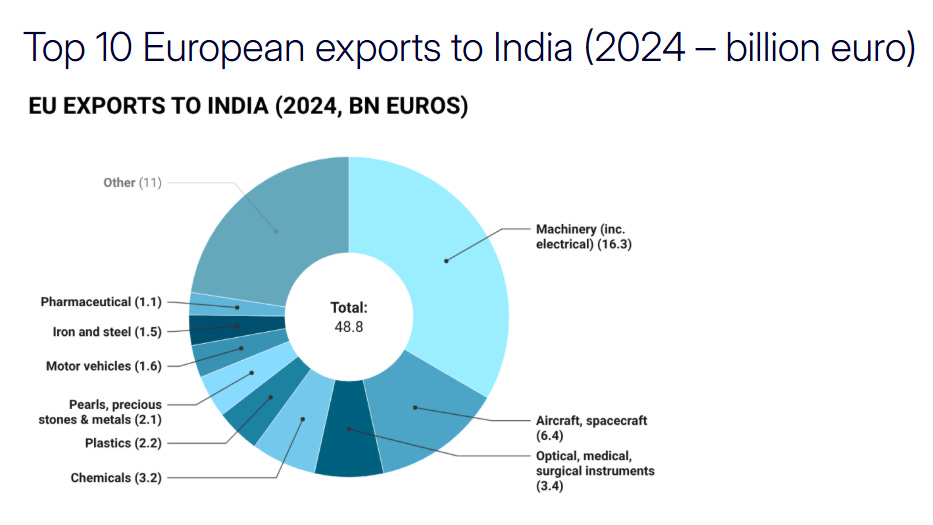
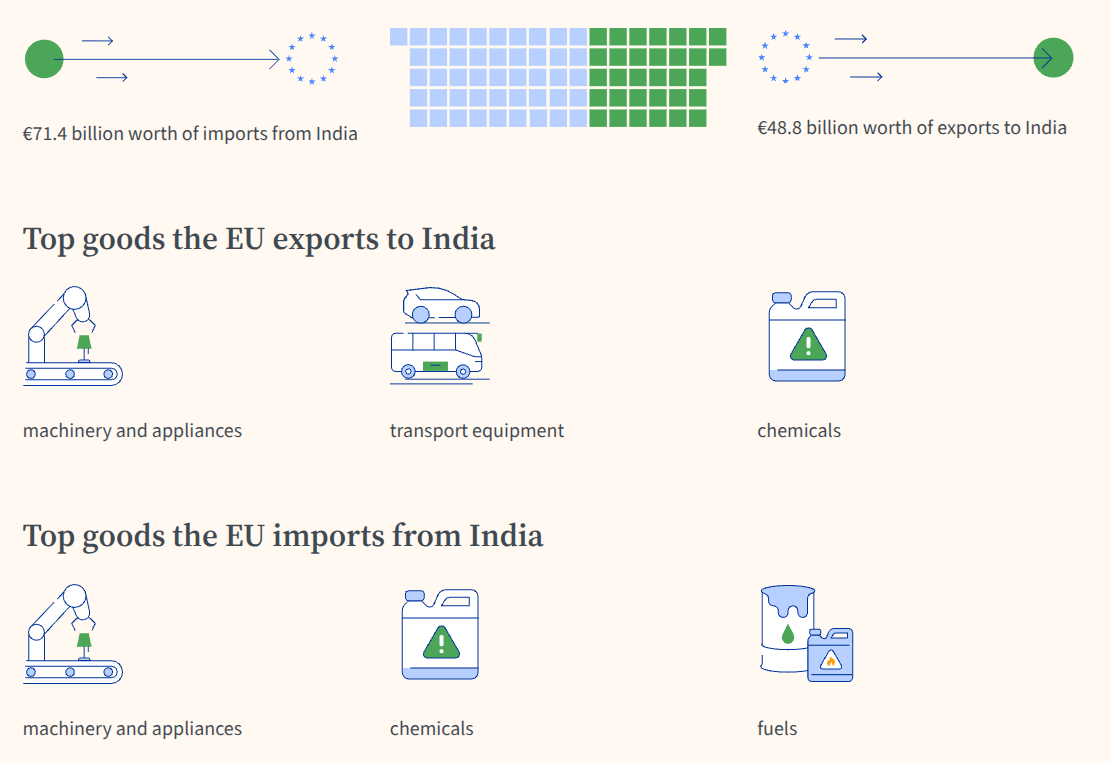
The agreement will link a market of roughly two billion consumers and bilateral trade of €120 billion. The deal could boost the EU's €48.8 billion of exports to India, which the International Monetary Fund has forecast to grow by 6.4% for this year and next.
The European Commission will submit the agreement to the Council of the European Union for approval. The European Parliament will need to vote on it. India's Union Cabinet will need to sign off on the deal.
The EU and India signed the agreement on Tuesday amid increased tensions with the US. The Trump administration has threatened to renew tariffs against the EU over Greenland, deepening mistrust between the two. They have diverged on immigration, AI, and free speech.
India-US relations hit a low point last summer after Washington imposed punitive tariffs in response to India’s ussian oil imports. Their expected bilateral trade deal collapsed as a result.
Tariff Cuts and Market Access
The EU-India FTA is expansive yet pragmatic in design. India has agreed to reduce or eliminate tariffs on more than 96% of goods traded with the EU. It will preserve protections around politically sensitive sectors, such as agriculture and dairy.
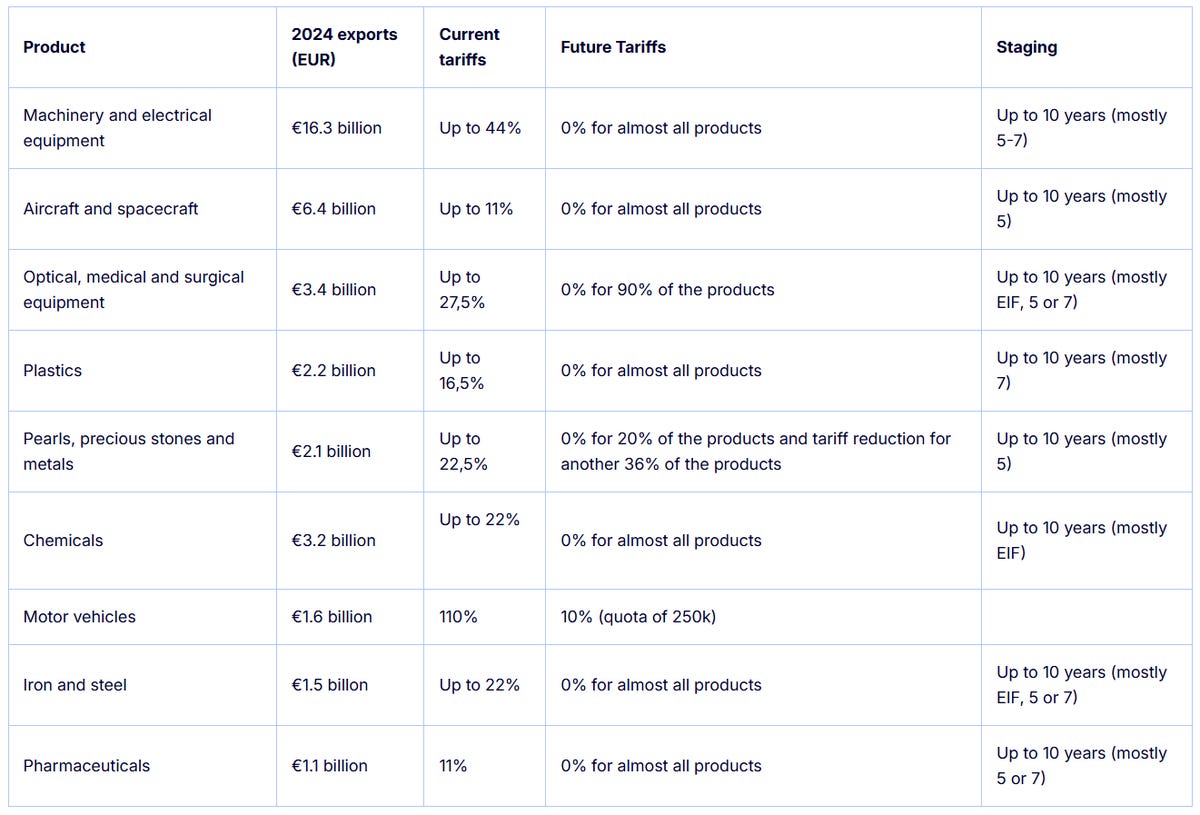
India will slash tariffs on European car imports from as high as 110% to 40%. It will gradually reduce them to as low as 10%. The new rates will apply to an annual quota of approximately 200,000 to 250,000 vehicles.
Indian tariffs on European wine and spirits will fall sharply. India will dismantle its import barriers on European machinery, chemicals, pharmaceuticals, and aircraft components over phased timelines.
In return, the EU has committed to lowering tariffs on Indian textiles, garments, gems and jewelry, leather goods, marine products, and chemicals. Many of these sectors were directly hit by the 50% US tariffs imposed in late August, making the timing of the deal particularly consequential for Indian exporters.
The free trade agreement doesn't cover the production of generic medicines, core farm products, such as dairy, cereals, and other staples, and the EU's Carbon Border Adjustment Mechanism.
"It's always the most sensitive issues that take the longest, and India and the EU have conveniently set some of these aside in the rush to conclude an agreement," Mark Linscott, the Atlantic Council's nonresident senior fellow on India, wrote.
FTA IS a Strategic Divergence from China
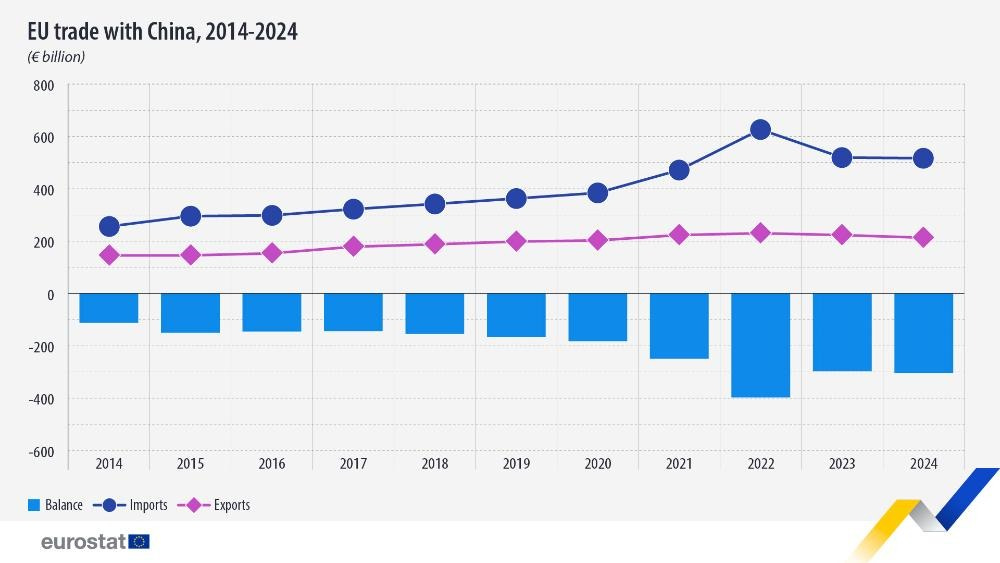
China loomed large in the strategic logic underpinning the EU–India free trade agreement. For much of the past two decades, European manufacturers treated China as their primary growth engine for automobiles, machinery, chemicals, and clean technology.
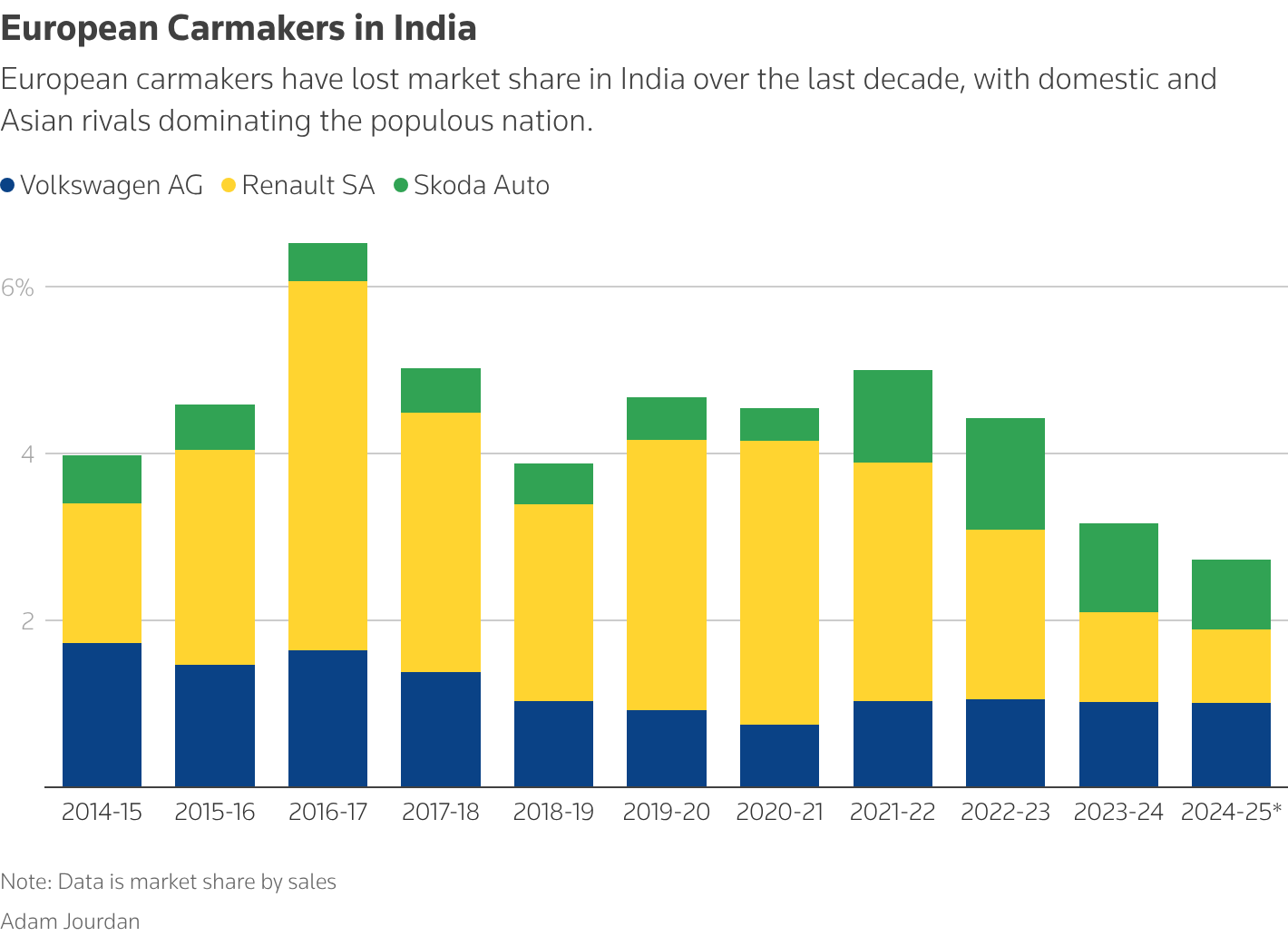
European automakers have lost significant ground to China. The free-trade agreement could counter that trend.
Corporate Winners for Europe
European automakers stand to gain the most visible near-term upside. India's domestic car sector has had tariffs ranging from 70–110%.
Volkswagen AG (XETRA: VOWG.DE), Renault SA (EPA: RENA.PA), and Stellantis NV (BIT: STLAM.MI) could benefit from the trade deal. Luxury automakers Mercedes-Benz Group AG (XETRA: MBG.DE), BMW AG (XETRA: BMWG.DE) could see an increase in sales from the deal.
Volkswagen Group has characterized India as a high-growth market of strategic importance. It has said it is assessing the commercial implications of the EU–India trade agreement across its brands.
Volkswagen reported in 2025 that it reached a cumulative production of two million vehicles in India.
EU Carmakers Face Stiff Competition
European carmakers will face stiff competition from Hyundai Motor Co. and Suzuki Motor Corp. Tata Motors Ltd, Maruti Suzuki India Ltd., and Mahindra & Mahindra Ltd. control roughly 67% of total sales in India.
European manufacturers account for less than 3% of India's passenger vehicle market, industry data shows.
"It's a start," Stefan Bratzel of German auto research group CAM said about the free trade agreement. "When we talk about exports from Europe, it's only about premium cars. In India, it's about cheap, reliable, stable cars."
Volkswagens may be "too expensive" for Indian consumers, Bratzel said. Maruti Suzuki India and Hyundai Motor India have "better understood" the Indian market, he said.
Market Losers and Domestic Pushback in India
Indian shares rallied in a volatile trading session after the FTA announcement, with the Nifty 50 rising 0.51% and the BSE Sensex gaining 0.39%. Shares of domestic automakers fell 0.9% on concerns that tariffs will hurt domestic manufacturers.
The country's biggest carmaker, Maruti Suzuki India, and Tata Motors Passenger Vehicles fell 1.5% and 1.1%, respectively. Mahindra & Mahindra fell 4.2%.
"Reducing India's high import duties will open the market to competition from European manufacturers," Arisia, a Netherlands‑based NGO focused on labor rights and corporate accountability in South Asia, said. "Indian manufacturers will likely struggle to meet these EU requirements and standards."
Indian specialty chemical firms like Aarti Industries and SRF Ltd. could face intensified domestic competition from high-scale European rivals. A 15–22% carbon price hike due to the EU's Carbon Border Adjustment Mechanism could hurt steel giants Tata and JSW.
A Strategic Recalibration
The EU-India FTA will not replace China as a manufacturing hub or the US as Europe's largest trading partner. It reflects a shared recognition that economic security now sits alongside growth as a core trade objective.
"The EU-India FTA results in a substantial trade diversion from China," the Germany-based Kiel Institute for the World Economy said. "It will support both EU de-risking objectives and India's supply chain diversification strategy."
For Europe, it offsets export losses from US tariffs, diversifies political risk, and provides potential growth opportunities for industries under pressure at home and in China. For India, it secures preferential access to a large, high-income market as Washington grows more unpredictable.
"We did it," European Commission President Ursula von der Leyen said. "We have delivered the mother of all deals.”
Disclaimer: Any opinions expressed in this article are not to be considered investment advice and are solely those of the authors. European Capital Insights is not responsible for any financial decisions made based on the contents of this article. Readers may use this article for information and educational purposes only.
Benzinga Disclaimer: This article is from an unpaid external contributor. It does not represent Benzinga’s reporting and has not been edited for content or accuracy.
© 2026 Benzinga.com. Benzinga does not provide investment advice. All rights reserved.