
US President Donald Trump's new National Security Strategy (NSS) has warned the European Union (EU) about mass migration and its crackdown on free speech as Brussels hits Elon Musk's X with a €120 million fine.
The security strategy, released on December 5, warned of what it characterized as Europe's "civilizational erasure." The administration cited "migration policies that are transforming the continent and creating strife, censorship of free speech and suppression of political opposition,” as key catalysts of Europe's decline.
The 33-page strategy emphasized the need for the US to "cultivate resistance to Europe's current trajectory within European nations." The NSS questioned if the NATO alliance would survive without a change in Europe’s immigration policies.
"Should present trends continue, the continent will be unrecognizable in 20 years or less," the document read. "It is more than plausible that within a few decades at the least, certain NATO members will become majority non-European."
Despite the Trump administration's concerns outlined in the NSS, some European officials characterized Washington's critiques as unwelcome. The US is "our most important ally in the [NATO] alliance," German Foreign Minister Johann Wadephul said on December 5.
"We see ourselves as being able to discuss and debate these matters entirely on our own in the future, and do not need outside advice," Wadephul added.
Europe Struggles With Mass Immigration
Germany, whose former Chancellor Angela Merkel famously refused to accept any upper limit on immigration in 2017, has reevaluated its policies under sustained economic and social pressure. The UK is on track to spend record-breaking sums on welfare for non-British immigrants.
In cities from The Hague to London, citizens have taken to the streets to decry what they describe as their governments' "failures in asylum policy." This discontent has helped fuel the rise of what the NSS described as the "growing influence of patriotic European parties," a development the White House cited as "cause for great optimism."
Indeed, events in the past two weeks suggest that the fears of some in European and the Trump administration are not ill-founded.
This Christmas season, hardened perimeters, armed security, and walls of "Merkel-Legos" have become just as much of a tradition in capitals across Europe as the festive, centuries-old cultural events themselves.
Pro-Palestinian Protesters Swarm Christmas Market
In Belgium, videos showed mobs of pro-Palestinian protesters crashing the opening of the Brussels Christmas Market. They chanted "pro-Hamas slogans…letting off smoke bombs."
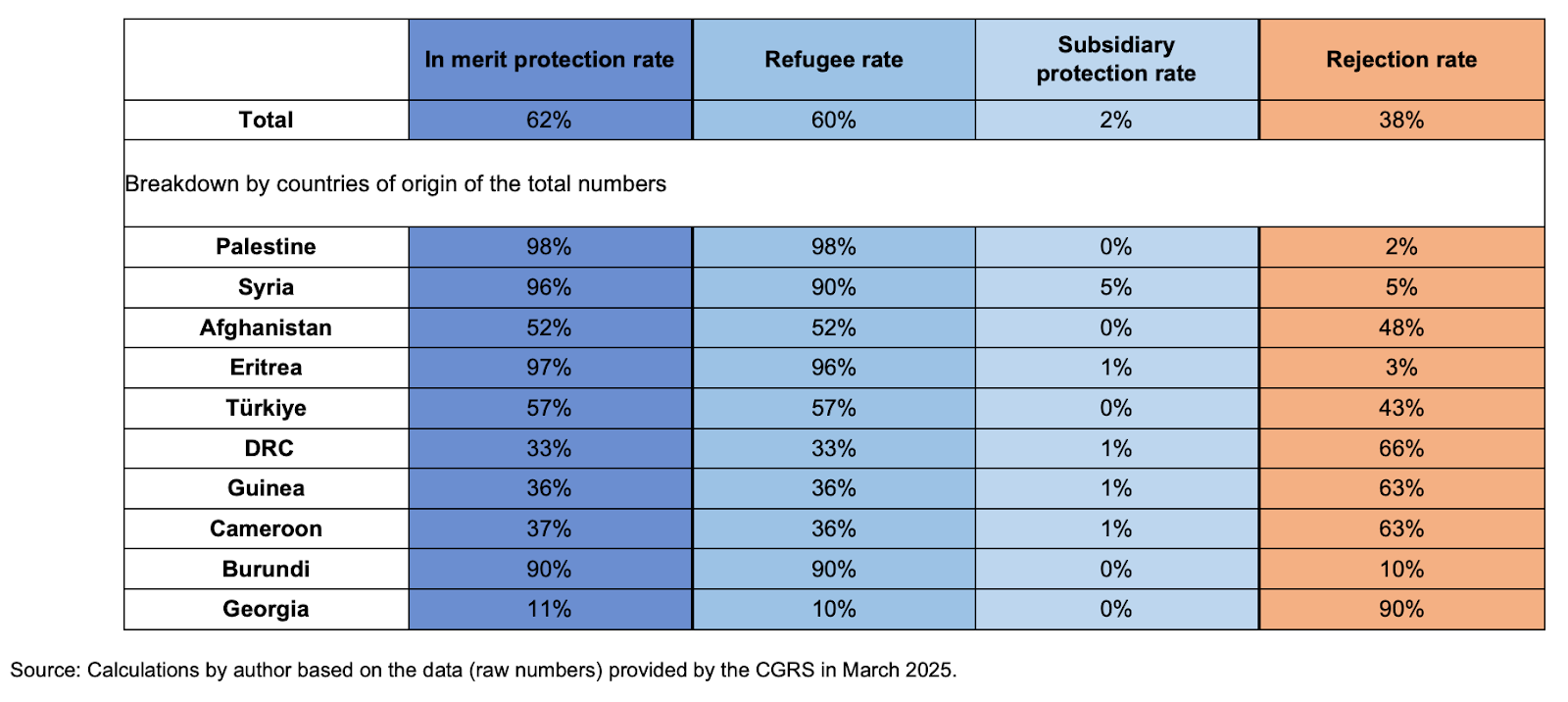
According to a June 2024 report from the European Council on Refugees and Exiles (ECRE) and Asylum Information Database (AIDA), the number of refugees granted asylum in Belgium increased by 11.6% in 2024.
Palestinians were "the main recipients of refugee status," with only 2% of first-time applicants being rejected.
"Belgians want to be the good guys who open their arms to refugees,” David Josef Volodzko, head of news at the non-partisan Foundation for Individual Rights and Expression (FIRE), wrote on December 2. “This isn't going to end well, and Europe as a whole seems determined to learn this simple lesson in the hardest and most painful way possible."
French Police Exercise ‘Maximum Vigilance'
France's Interior Minister Laurent Nunez issued a December 3 directive to French police to exercise "maximum vigilance" and "reinforced security measures" at Christmas markets nationwide. In neighboring Germany, security costs for protecting public events have increased by 44% over the past three years.
"The real question is why European governments are tolerating a situation where they must deploy extraordinary security just so people can safely celebrate a tradition that has been central to European life for centuries," Alan Mendoza, executive director of the Henry Jackson Society, told Fox News Digital on December 6.
"Europe needs an aggressive strategy that targets the radicals — imprisoning them, deporting them if they're not citizens — because you can't secure your way out of this forever," Mendoza added. "Europeans are increasingly fed up with what's happening to their societies."
The Trump administration has vocalized what many Europeans say quietly, Danish member of the European Parliament and Liberal Alliance party member Henrik Dahl wrote in a December 5. "A continent without political will and without confidence in its own future cannot function as a stable partner in an era of great-power rivalry."
Brussels, Washington Clash Over Free Speech
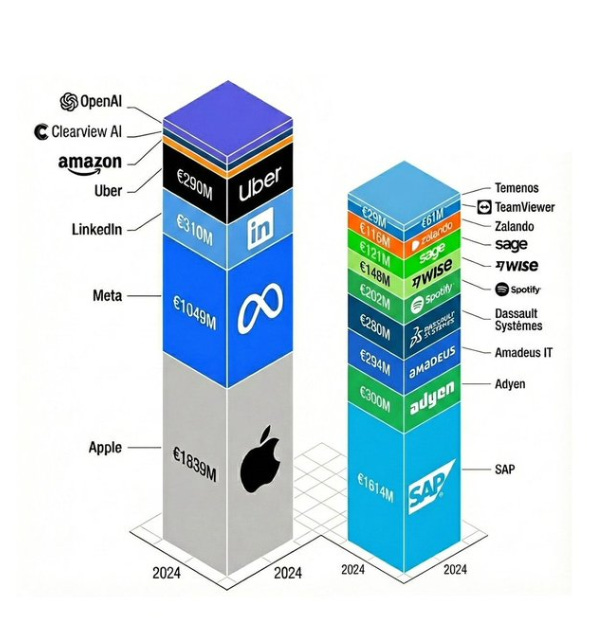
The EU and the US have also clashed over freedom of speech. The same day the White House released its NSS, the European Commission (EC) announced a €120 million fine against X.
The social media platform owned by Elon Musk allegedly engaged in "deceptive design of its ‘blue checkmark," the EC said on December 5. The commission accused X of "a lack of transparency of its advertising repository, and the failure to provide access to public data for researchers."
The commission's Technology Chief Henna Virkkunen told reporters that the DSA and the decision against X have "nothing to do with censorship."
The decision is the first non-compliance penalty levied under the bloc's 2022 Digital Services Act DSA.
Musk Pushes Back Against EC Fine
Musk and key figures in the US administration disagreed with the EU assessment.
The Tesla Inc. CEO called the decision "Bullshit" in a post on X. US Vice President JD Vance wrote that the "EU should be supporting free speech, not attacking American companies over garbage."
This is not the first time the EU has applied pressure on X to conform to its digital policies. In June 2023, the bloc went after the platform for what it characterized as noncompliance with its protections against disinformation and hate speech.
In October 2023, the EC formally warned X about spreading "illegal content and disinformation" related to Hamas's October 7 terror attack on Israel.
The latest fine “isn't just an attack on @X,” US Secretary of State Marco Rubio wrote. “It’s an attack on all American tech platforms and the American people by foreign governments."
Trump Reconfirms Commitment to NATO, Europe
The NSSS strategy offered additional insight into Trump's position on Ukraine’s and Europe’s future.
The White House re-emphasized that it is "a core interest of Washington to negotiate an expeditious cessation of hostilities in Ukraine." It highlighted the administration's commitment to its European allies. "Not only can we not afford to write Europe off—doing so would be self-defeating for what this strategy aims to achieve," the NSS noted.
"Our goal should be to help Europe correct its current trajectory. We will need a strong Europe to help us successfully compete, and to work in concert with us to prevent any adversary from dominating Europe."
This has been seen as a signal that more isolationist factions within the Trump administration and his base remain on the periphery regarding US-European foreign policy.
"There will be hand-wringing," Rebeccah Heinrichs, director of the Hudson Institute's Keystone Defense Initiative, wrote on X. "But the document is PRO Europe and committed to NATO. I think there is a strong anti-European anti-NATO faction. And they did not win in this NSS."
Disclaimer: Any opinions expressed in this article are not to be considered investment advice and are solely those of the authors. European Capital Insights is not responsible for any financial decisions made based on the contents of this article. Readers may use this article for information and educational purposes only.
Benzinga Disclaimer: This article is from an unpaid external contributor. It does not represent Benzinga’s reporting and has not been edited for content or accuracy.
© 2025 Benzinga.com. Benzinga does not provide investment advice. All rights reserved.


