1) Hedging With Optimal Puts
High. Uncapped upside.
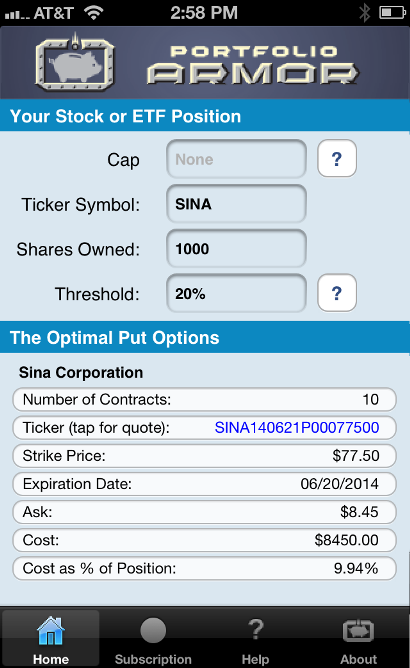
These were the optimal puts*, as of Wednesday afternoon, to hedge 1000 shares of SINA against a greater-than-10% drop between now and June 20th.
As you can see at the bottom of the screen capture below, the cost of this protection, as a percentage of position value, was quite high at 9.94%.
2) Hedging With An Optimal Collar
Pays you to hedge. 20% upside cap.
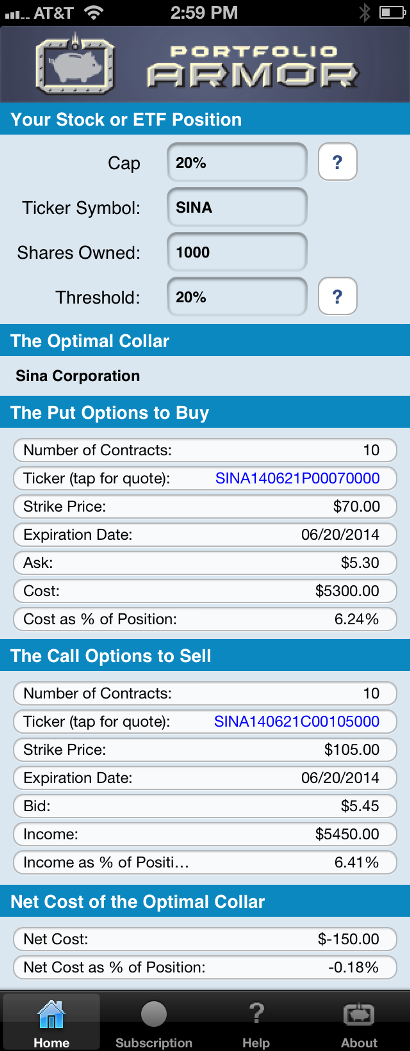
If you were willing to cap your potential upside at 20% between now and June 20th, this was the optimal collar** to hedge 1000 shares of SINA against a greater-than-20% drop over the same time frame.
As you can see at the bottom of the screen capture above, the net cost of this collar was negative, meaning an investor would get paid to hedge in this case.
Note that, to be conservative, Portfolio Armor calculated the cost of this hedge by using the bid price of the call leg and the ask price of the put leg. In practice, you can often sell calls for more (at some price between the bid and ask) and buy puts for less (again, at some price between the bid and ask), so, in actuality, an investor opening the optimal collar above may have actually been paid more than $150 to do so.
Possibly More Protection Than Promised
In some cases, hedges such as the ones above can provide more protection than promised. For a recent example of that, see this post about hedging shares of Tesla Motors, Inc. (NASDAQ: TSLA).
*Optimal puts are the ones that will give you the level of protection you want at the lowest possible cost. Portfolio Armor uses an algorithm developed by a finance PhD to sort through and analyze all of the available puts for your stocks and ETFs, scanning for the optimal ones.
© 2026 Benzinga.com. Benzinga does not provide investment advice. All rights reserved.
To add Benzinga News as your preferred source on Google, click here.